If a storm has just torn through your roof, fence, or siding, the order you do things in matters almost as much as what you do. Document the damage before you touch anything, separate storm damage from pre-existing wear in your notes, and call your insurance company only after you have photos, a written timeline, and a rough sense of what’s actually affected. Insurers process claims faster and with fewer disputes when the policyholder shows up organized. This checklist walks through what to capture, what to avoid saying or doing, and when it’s worth bringing in a restoration crew before the adjuster even arrives.
Why the Order of Operations Matters
Colorado Springs storms tend to arrive fast: a Front Range hailstorm or high-wind event can do its damage in twenty minutes and leave behind a mix of obvious problems (missing shingles, a cracked window) and less obvious ones (water intrusion behind siding, a soaked attic insulation layer you won’t see until the ceiling stains). Insurance adjusters work from what you show them and what you report. If you call in a vague claim (‘storm damage to the roof’) before you’ve documented anything, you’re relying on the adjuster’s single visit to catch everything. If you call in with photos, a materials list, and a clear narrative, you’ve given the claim a much stronger foundation from day one.
This isn’t about being adversarial with your insurer. It’s about making sure the paperwork reflects what actually happened to your property, not just what was visible on the day someone finally looked.
Before You Call: The Checklist
- Photograph everything, in daylight if possible. Exterior damage first: roof, gutters, siding, fencing, any vehicles or outdoor structures. Then interior: ceiling stains, wet carpet, warped flooring, anything damp to the touch. Wide shots for context, close-ups for detail.
- Note the date and approximate time of the storm. Insurers cross-reference this against weather service data, so an accurate timeframe helps your claim line up with what’s on record.
- Make a room-by-room list of affected areas. Don’t rely on memory later. Write down which rooms have water intrusion, which have visible structural damage, and which seem fine but share a wall or ceiling with a damaged area.
- Check your attic and crawlspace if it’s safe to do so. Wind-driven rain and hail can compromise roof decking in ways that aren’t visible from the ground. A flashlight check of the attic (without walking on insulation in the dark) can catch early staining before it spreads.
- Pull your policy and find your deductible, coverage limits, and any exclusions for wind or hail. Some Colorado policies carry a separate, higher deductible specifically for wind/hail events. Know this number before the adjuster call so you’re not surprised later.
- Shut off anything actively leaking into the living space, such as capping a bucket under a ceiling drip or moving furniture away from a wet spot, but don’t start tearing out materials yet (more on that below).
- Call your insurer with your documentation in hand, not from memory. Reference your photos and your room-by-room list directly during the call.
What Not to Do
- Don’t start permanent repairs before the adjuster inspects the property. Temporary protective measures (tarping a hole, boarding a broken window) are expected and usually covered as mitigation costs, but replacing a roof or ripping out flooring before the claim is documented can give the insurer grounds to dispute what was actually storm-related.
- Don’t throw away damaged materials. Wet carpet, broken fencing, hail-dented gutters, keep them, or at minimum photograph them thoroughly, until your adjuster or a restoration company has had a chance to assess them.
- Don’t guess at cause on the phone. If you’re not sure whether a stain is new storm damage or a slow pre-existing leak, say that. Speculating out loud (‘I think this has been happening for a while’) on a recorded claims call can work against you even when it’s not true.
- Don’t skip the attic or crawlspace check because nothing is visibly leaking into the living space yet. Water intrusion into framing and insulation often shows up as a ceiling stain or a musty smell days after the actual storm.
- Don’t assume verbal confirmation is enough. Follow up any phone conversation with your insurer by email, restating what was discussed, so there’s a written record.
When to Bring in a Restoration Company
A few situations call for a professional assessment before or alongside the adjuster visit, rather than after:
- Active water intrusion. If rain is actively entering through a damaged roof or window, the clock on secondary damage (saturated insulation, mold colonization in wall cavities) starts immediately. A documented, professional mitigation response strengthens your claim and limits how far the damage spreads.
- Structural uncertainty. If you’re not sure whether storm damage compromised load-bearing elements, decking, trusses, framing, that’s not a DIY inspection.
- Hidden moisture you can’t quantify. Moisture meters and thermal imaging can confirm how far water has traveled into materials that look dry on the surface, which matters both for your health and for your claim’s accuracy.
- Large-scale or multi-area damage. A storm that hit the roof, a fence, and a basement window well all at once is a bigger documentation job than most homeowners can manage alone under time pressure.
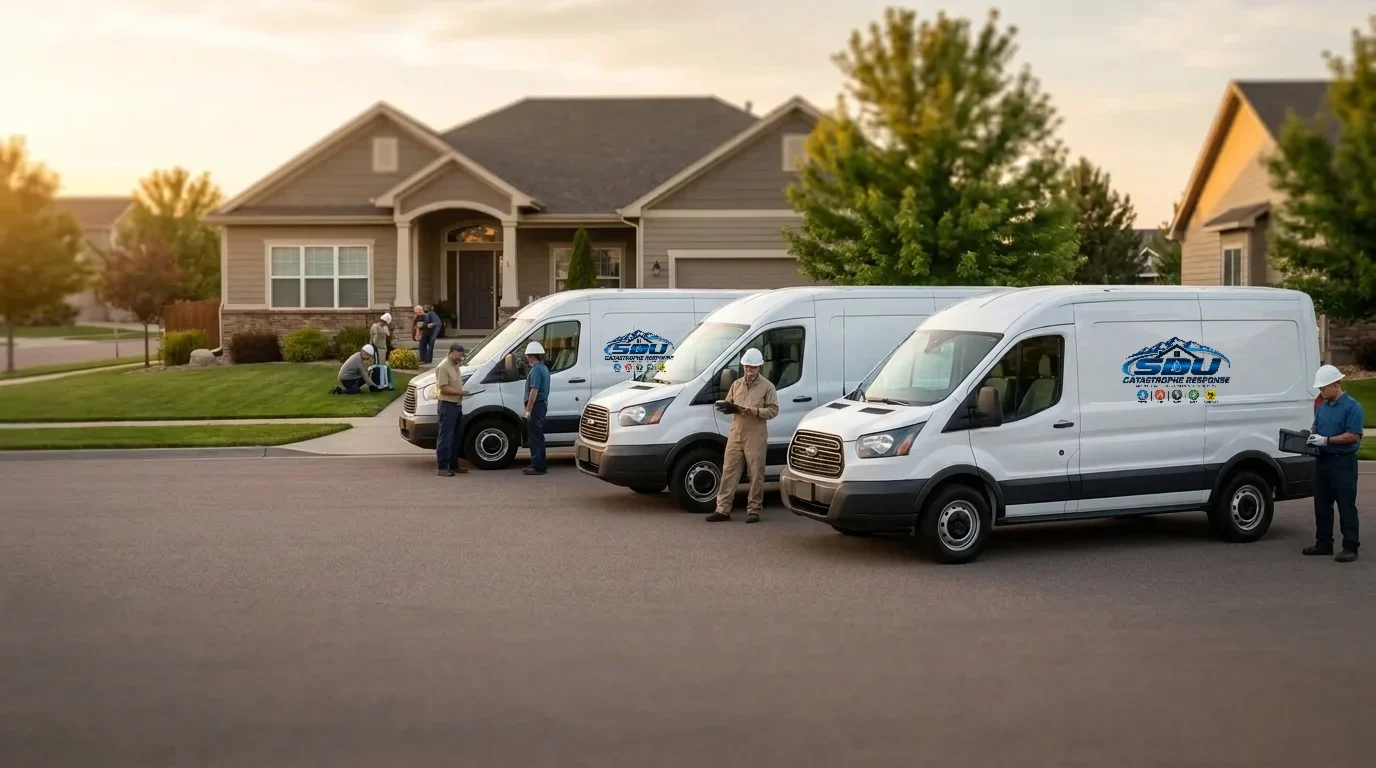
SDU Catastrophe Response handles storm damage restoration for Colorado Springs homes and can document conditions, perform emergency mitigation like tarping or water extraction, and provide the kind of detailed inspection report that supports an insurance claim rather than complicating it. Our team is an IICRC Certified Firm with WRT and ASD credentialed technicians, so the drying and moisture documentation follows recognized industry standards an adjuster will recognize.
What Happens After You File
Once your claim is filed, expect a sequence roughly like this: the insurer assigns an adjuster, who schedules an inspection (often within a week or two, longer during widespread regional storm events when claim volume spikes across the Front Range). The adjuster’s report, combined with your own documentation, forms the basis of the settlement offer.
If a restoration company has already performed mitigation work, keep every invoice and photo from that process. This becomes part of your claim file and often speeds up reimbursement, since it shows the insurer exactly what was done and why it was necessary. If repairs will take weeks, ask your insurer early about additional living expense coverage if the home is not safely habitable in the meantime.
A storm claim moves faster and settles more fairly when the paperwork reflects reality from day one. If your property has active damage right now and you’re not sure where to start, SDU Catastrophe Response can walk the property with you, document what matters, and handle the mitigation work that needs to happen before repairs can begin. Call (303) 656-9934 to talk through what you’re seeing.