24/7 Emergency Fire Damage Restoration in Colorado Springs
24/7 emergency fire damage restoration in Colorado Springs and surrounding areas. IICRC-certified, insurance billing accepted. Call (303) 656-9934.
Fire damage in Colorado Springs doesn’t stop when the flames go out. Call now, we answer 24/7. Soot is acidic and keeps etching into metal, glass, and painted surfaces for days after the fire department leaves, and the smell of smoke residue only gets harder to lift the longer it sits in drywall and fabric.
What Fire Damage Restoration actually involves
Fire damage restoration is the work of stabilizing a structure after a fire, then reversing the chemical and physical damage soot and heat leave behind. That means more than vacuuming ash off a countertop. Soot particles are often sub-micron in size and migrate into HVAC ducting, wall cavities, and electrical outlets through pressure differences created by the fire itself. A synthetic fire (plastics, foam furniture, modern finishes) leaves a different residue than a protein fire (meat, grease, a stovetop flare-up), and each requires a different cleaning chemistry to avoid smearing soot deeper into porous materials instead of lifting it out.
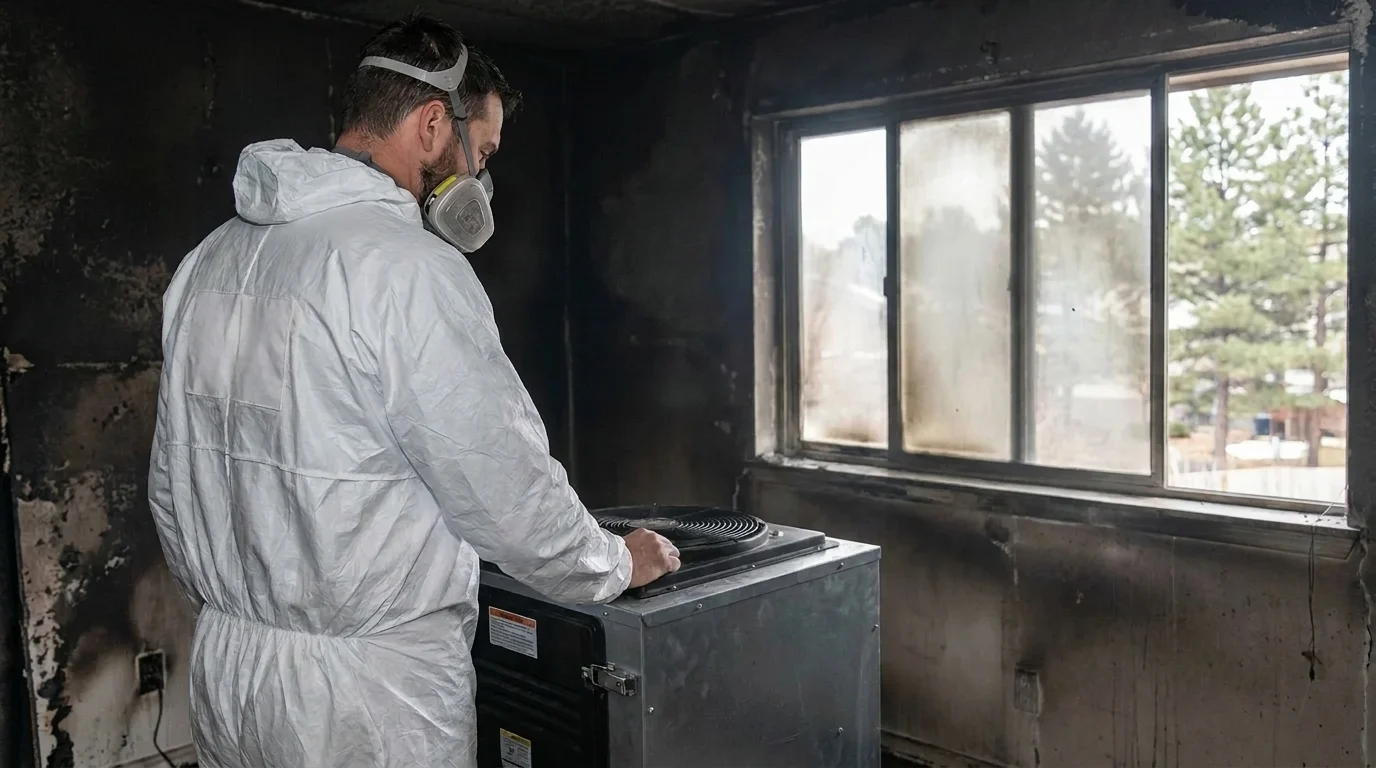
The work typically runs from a few days for a contained, single-room kitchen fire to several weeks for a structural fire that reached the attic or framing. Equipment includes HEPA air scrubbers to pull particulate out of the air, thermal foggers that neutralize odor at the molecular level rather than masking it, and in some cases ozone treatment for structural elements that can tolerate it (ozone is never run in occupied spaces). Contents that survived, textiles, electronics, photos, documents, are typically inventoried and either cleaned on-site or packed out to a cleaning facility, depending on the level of contamination.
Our process
- Soot characterization. Before any cleaning starts, we identify what burned and classify the soot type (dry, wet, protein, or fuel/oil residue), because the wrong cleaning agent on the wrong soot type can set a stain permanently.
- Structural stabilization and containment. Charred or compromised materials are secured, openings are weatherproofed, and containment barriers go up to keep soot from migrating into unaffected rooms during cleanup.
- Cleaning and thermal fogging. Surfaces are cleaned with soot-specific agents, and thermal fogging is used to drive deodorizing compounds into the same pores the smoke penetrated, rather than spraying over the top.
- Ozone or hydroxyl treatment. Where structurally appropriate, we use ozone treatment on vacant, unoccupied areas to break down residual odor compounds that cleaning alone won’t fully resolve.
- Contents pack-out and final inspection. Salvageable contents are documented and either cleaned in place or packed out, and we walk the structure with a final odor and visual check before calling the job complete.
What separates a good fire damage response from a bad one
The most common mistake is treating fire cleanup like a deep clean: scrubbing visible soot off walls and furniture while skipping the HVAC system, wall cavities, and subfloor. Soot that gets pulled into return air ducts during the fire will keep re-depositing a faint odor for months if the ductwork isn’t cleaned or isolated. Another frequent miss is using an all-purpose cleaner on protein soot, which tends to smear a greasy, yellow-brown film across cabinets and tile instead of lifting it.
Insurance adjusters generally want to see documented soot classification, room-by-room photos before cleaning begins, and a clear line between what’s salvageable and what requires replacement. A written scope that separates structural cleaning from contents cleaning also tends to move claims faster, because it lets the adjuster approve each category independently instead of waiting on one combined estimate.
What does Fire Damage Restoration cost?
Costs vary widely based on how far the fire spread, what materials burned, and whether smoke reached the HVAC system or upper floors. Every loss is different, and SDU Catastrophe Response provides a written scope of work before any cleaning or repair begins, so you know what’s included and why. Most homeowners insurance policies cover fire and smoke damage restoration as part of standard dwelling coverage, though smoke-only claims (no visible flame damage) are sometimes scrutinized more closely by adjusters.
| Scenario | Typical range |
|---|---|
| Small kitchen fire, contained to one room | $2,500 - $8,000 |
| Smoke damage only, no structural burn | $3,000 - $10,000 |
| Single-floor fire with HVAC contamination | $10,000 - $30,000 |
| Structural fire reaching attic or framing | $30,000 - $75,000+ |
| Whole-house fire with major content loss | $75,000 - $150,000+ |
Seasonal & regional considerations
Colorado Springs winters bring dry air and more indoor heating use, space heaters, wood stoves, fireplaces, which tends to push fire-related calls higher in the colder months. Dry air also means soot and ash can travel further through a structure before settling, since there’s less ambient moisture to weigh particulate down. In older homes along the Westside and downtown corridors with original lath-and-plaster or older electrical systems, fire damage often extends further into wall cavities than it appears from the surface, which is why we check behind finished surfaces rather than cleaning only what’s visible.
Service area
We respond to fire damage calls throughout Colorado Springs and surrounding communities including Fountain, Monument, Falcon, and Woodland Park.
If your home or business has smoke or fire damage, don’t wait for the odor to set deeper into your walls and belongings. Call SDU Catastrophe Response at (303) 656-9934 to begin smoke and soot removal with a crew that documents the loss the way your insurance adjuster expects to see it.
Frequently Asked Questions
Does homeowners insurance cover fire damage restoration?
What's the difference between protein soot and synthetic soot, and why does cleanup vary?
Can smoke odor really get trapped in walls and HVAC ducts?
Is ozone treatment safe to use in my home during fire damage cleanup?
What should I do with belongings while waiting for fire damage restoration to start?
Looking for the best fire damage restoration company in Colorado Springs?
SDU Catastrophe Response provides fire damage restoration in Colorado Springs, CO and the surrounding area. We answer calls 24/7 — call (303) 656-9934 for immediate help.
Need Fire Damage Restoration now?
We respond 24/7 across Colorado Springs and surrounding CO cities.
Related Coverage
- Our Restoration Services
- Contact SDU Catastrophe Response
- 24/7 Emergency Fire Damage Restoration in Black Forest
- 24/7 Emergency Fire Damage Restoration in Woodland Park
- How To Choose a Restoration Company in Colorado Springs (Without Getting Burned)
- The Fire Damage Restoration Process, Explained
- How Professionals Remove Smoke Odor (and Why DIY Usually Fails)