Mold Remediation in Colorado Springs
24/7 mold remediation in Colorado Springs and surrounding areas. IICRC-certified, insurance billing accepted. Call (303) 656-9934.
A musty smell that won’t go away after a slow leak, dark speckling creeping along a bathroom ceiling, or a basement that smells different every time it rains, these are the signals that mold has moved past a surface nuisance and into something that needs a trained response. Mold spores are present in every home, but once moisture, warm air, and an organic surface like drywall or framing lumber sit together for 24 to 48 hours, colonization can start. By the time it’s visible, the growth is often more extensive behind the wall than on it.
What Mold Remediation actually involves
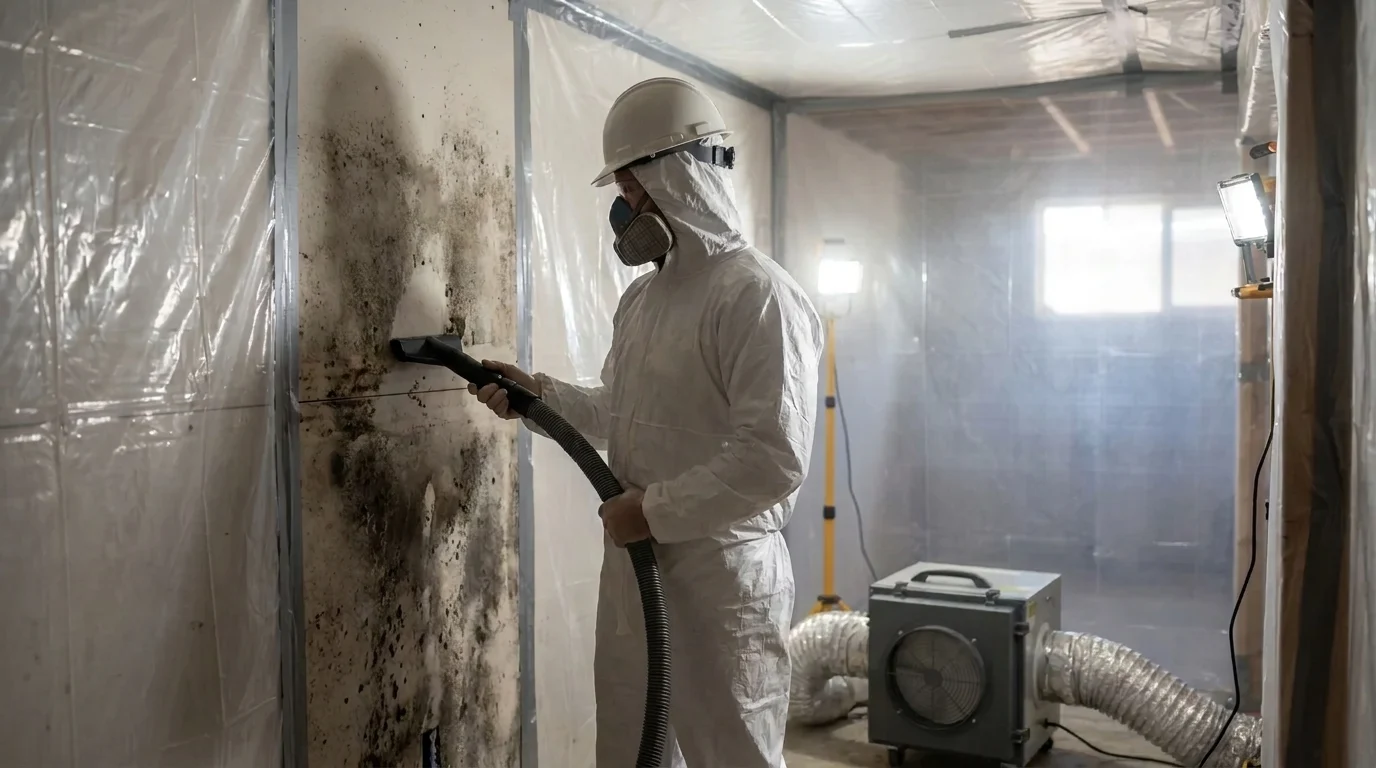
Mold remediation is not the same job as a surface cleaning with bleach. It starts with identifying the moisture source, because treating mold without fixing the water problem behind it means the growth returns. From there, the work typically involves sealing off the affected area, removing materials that can’t be salvaged (porous materials like drywall, insulation, and some subfloor usually can’t be cleaned, only replaced), scrubbing and treating the materials that can stay, and running air scrubbing equipment to bring airborne spore counts back down to a normal range. Depending on the size of the affected area and how far the growth has traveled through wall cavities or under flooring, a remediation project can run anywhere from a single day for a contained bathroom ceiling to a week or more for a basement with saturated framing.
Our process
- Assessment and moisture mapping. We identify the water source, measure moisture content in surrounding materials, and determine how far the growth has likely spread beyond what’s visible.
- Containment setup. Plastic sheeting and negative air pressure isolate the work area so spores don’t migrate to unaffected rooms during demolition and cleaning, a step that matters most once the affected area crosses the square footage thresholds outlined in the IICRC S520 standard.
- Air sampling. Where warranted, air samples are taken before work begins to document baseline conditions and guide the scope.
- Removal and HEPA cleaning. Unsalvageable materials are bagged and removed through the containment, salvageable surfaces are treated, and HEPA-filtered vacuums and air scrubbers clean remaining dust and spores from the space.
- Clearance testing. Once visible mold and odor are addressed, a follow-up air or surface sample can confirm the space has returned to an acceptable range before containment comes down.
What separates a good Mold Remediation response from a bad one
The most common mistake is treating what’s visible and ignoring what isn’t. Mold that shows up on a ceiling tile or baseboard is frequently just the part that made it to a surface, the real colony is often inside a wall cavity or under flooring where humidity stayed elevated the longest. A rushed job seals and paints over a surface without addressing hidden moisture, and the growth returns within weeks. Another frequent gap is skipping containment on a job that’s technically small enough to “wing it,” which turns a contained bathroom problem into airborne spores reaching the hallway or an HVAC return. Insurance adjusters reviewing a mold claim typically want documentation of the originating water event, moisture readings before and after drying, photos of affected materials, and in some cases lab results confirming spore types and post-remediation clearance. Remediation without that paper trail is harder to get covered and harder to prove was done correctly if a buyer or future inspector asks questions.
What does Mold Remediation cost?
Costs vary widely based on how much material has to come out, whether containment and air scrubbing equipment are needed, and whether lab testing is part of the scope. These figures are typical industry ranges, not a quote, every mold job is different and SDU Catastrophe Response provides a written scope before any work begins. Homeowners insurance often covers mold remediation when the growth resulted from a covered water event, such as a burst pipe, but typically excludes mold tied to long-term neglect or unaddressed leaks, so documentation of the originating cause matters for the claim.
| Scenario | Typical range |
|---|---|
| Small bathroom, surface mold on ceiling or grout | $500 - $1,500 |
| Contained area with minor drywall removal | $1,500 - $3,500 |
| Basement or crawlspace with moderate growth | $3,000 - $7,000 |
| Whole-room remediation with full containment and air scrubbing | $5,000 - $10,000 |
| Extensive growth through framing and HVAC, lab testing included | $10,000 and up |
Seasonal & regional considerations
Colorado Springs’ dry climate keeps overall mold pressure lower than in humid regions, but that doesn’t make homes immune. Older basements with poured or block foundations can trap humidity after snowmelt seepage or a sump pump issue, and homes with evaporative coolers sometimes see elevated indoor humidity during the summer months if the system isn’t draining properly. A slow plumbing leak behind a wall creates the same localized humid microclimate here as anywhere else, dry regional air doesn’t stop mold from growing inside a wall cavity that’s staying wet.
Service area
SDU Catastrophe Response handles mold remediation throughout Colorado Springs and the surrounding Front Range communities, including homes along the older neighborhoods near downtown with original plumbing and newer construction on the city’s east side where finished basements are common.
If you’re smelling something musty or seeing discoloration that keeps coming back no matter how many times it’s wiped down, request an air quality test and get a clear answer on what’s actually growing and how far it’s spread before deciding on next steps.
Frequently Asked Questions
Does homeowners insurance cover mold remediation?
What level of mold remediation requires IICRC S520-compliant containment?
Can I just clean the mold myself with bleach?
How long does mold remediation take?
Do you test the air after remediation to confirm the mold is gone?
What should I do while waiting for a mold inspection or remediation appointment?
Watch: Mold Remediation in Colorado Springs
Looking for the best mold remediation company in Colorado Springs?
SDU Catastrophe Response provides mold remediation in Colorado Springs, CO and the surrounding area. We answer calls 24/7 — call (303) 656-9934 for immediate help.
Need Mold Remediation now?
We respond 24/7 across Colorado Springs and surrounding CO cities.
Related Coverage
- Our Restoration Services
- Contact SDU Catastrophe Response
- How To Choose a Restoration Company in Colorado Springs (Without Getting Burned)
- How To Test for Mold in Your Home (DIY Kits vs a Pro Inspection)
- 7 Signs You Have Hidden Mold (and What To Do Next)
- Mold Remediation Cost in Colorado Springs, CO: What Colorado Homeowners Pay (2026)