TL;DR: Water cleanup in Colorado typically costs $300 to $15,000 or more, depending on how contaminated the water is and how much of the home it reached. A single clean-water room runs $1,200 to $3,000. Sewage or flood water cleanup that requires removing contaminated materials can run $6,000 to $15,000 or higher. Homeowners insurance often covers sudden, accidental water damage, but gradual leaks, sewer backups, and flooding usually need separate coverage.
If a pipe just split open in a Rockrimmon basement or a washing machine hose let go overnight near Old Colorado City, the number you actually need right now isn’t a national average. It’s what water cleanup runs here in Colorado. Prices swing more than most people expect, mostly because of what’s in the water and how long it sat before someone pulled it out. Here’s the real range, what moves it, and what a policy is likely to pay.
What Does Water Cleanup Cost in Colorado?
Most Colorado homeowners pay between $1,200 and $7,000 for professional water cleanup, with small clean-water spills on the low end and multi-room jobs involving contaminated water on the high end.
| Scenario | Typical Cost |
|---|---|
| Spot extraction, single room, clean (Category 1) water | $300 - $800 |
| Full extraction + structural drying, one room (Category 1) | $1,200 - $3,000 |
| Multi-room extraction + drying (Category 1-2) | $3,000 - $7,000 |
| Category 2 (gray water) cleanup with material removal | $4,000 - $8,000 |
| Basement flood cleanup, large volume (Category 2-3) | $5,000 - $12,000 |
| Category 3 (black water/sewage) cleanup with antimicrobial treatment | $6,000 - $15,000+ |
These are typical industry ranges for the Front Range, not a quote. Every loss is different, and a reputable restoration company should walk the property and write a scope before any work starts, so the final invoice matches what was actually done.
What Factors Affect the Cost of Water Cleanup?
The biggest cost driver is the water’s category under the ANSI/IICRC S500 standard: clean water from a supply line costs far less to clean up than gray or black water, which requires more labor, more material removal, and antimicrobial treatment.
Other factors that move the price:
- Square footage affected. More wet floor and wall area means more equipment and more labor hours.
- Response time. Water that sits for 24 to 48 hours starts to wick into drywall, baseboards, and subfloor, turning a surface job into a demolition job.
- Materials involved. Hardwood floors, plaster, and cabinetry (IICRC Class 4 drying situations) cost more to dry or replace than carpet and drywall.
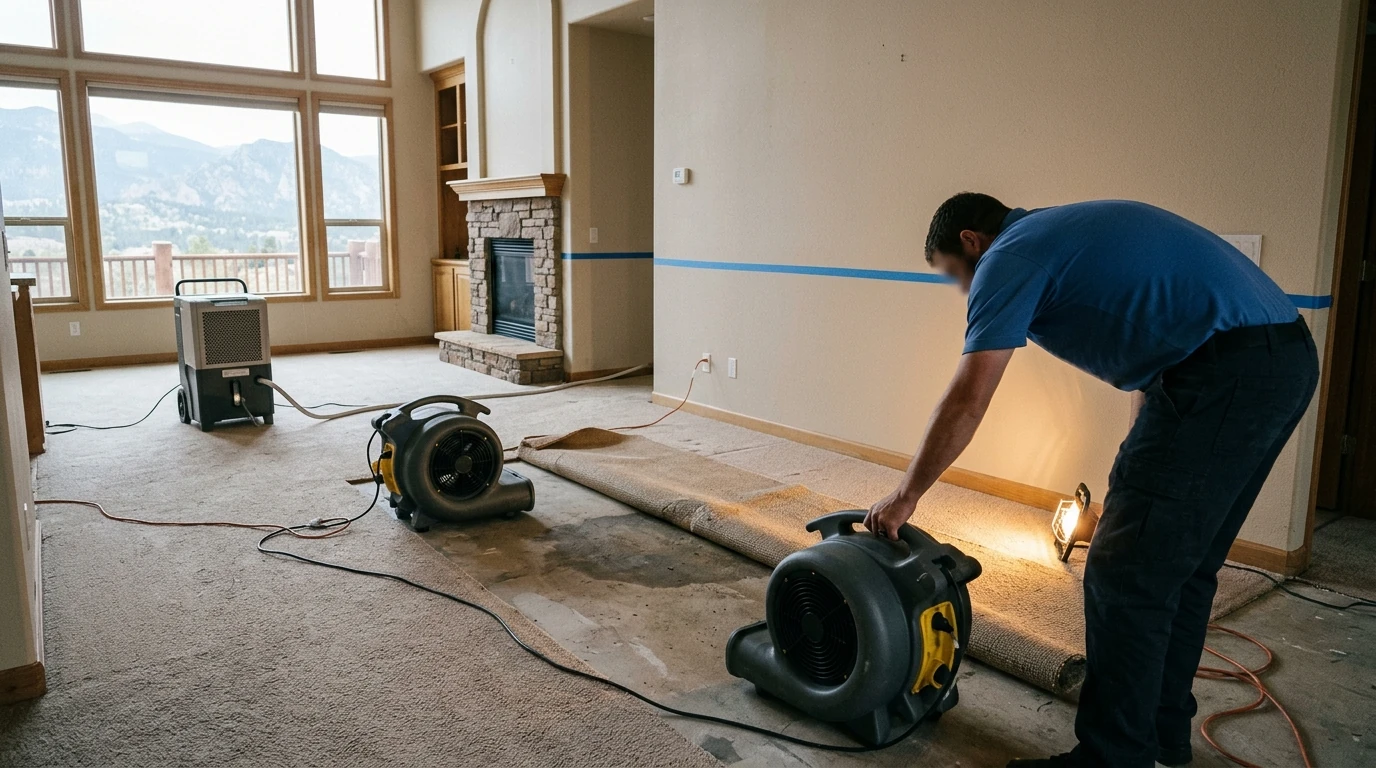
- Equipment needed. A single room might need two air movers and a dehumidifier; a flooded basement in Security-Widefield or Fountain after a summer downpour can need a dozen units running for days.
- Code upgrades. If permits require upgraded insulation or updated electrical when walls come out, that’s an added line item, not a restoration cost.
Does Homeowners Insurance Cover Water Cleanup Costs?
Most standard homeowners policies cover sudden, accidental water damage, like a burst pipe or a water heater that fails without warning, but they typically exclude gradual leaks, long-term seepage, and ordinary wear and tear.
Flooding from outside the home, whether it’s surface water, a rising creek, or storm runoff, isn’t covered by a standard policy at all. That needs a separate flood policy through the National Flood Insurance Program or a private flood carrier. Sewer backups and sump pump failures are also excluded unless the policy has a water backup endorsement added. If a sewer line backs up into a Fountain-area basement and there’s no endorsement on file, that cleanup is almost always out of pocket.
Homeowners also have a duty to mitigate: starting extraction and drying promptly, and documenting everything with photos and receipts, protects the claim regardless of which way it goes. For a fuller breakdown of what’s typically covered, see Does Homeowners Insurance Cover Water Damage? and the Insurance Information Institute’s guide to standard homeowners coverage.
What Happens During a Professional Water Cleanup?
A professional water cleanup follows a set sequence, and understanding it explains why a bigger job costs more than a quick mop-up.
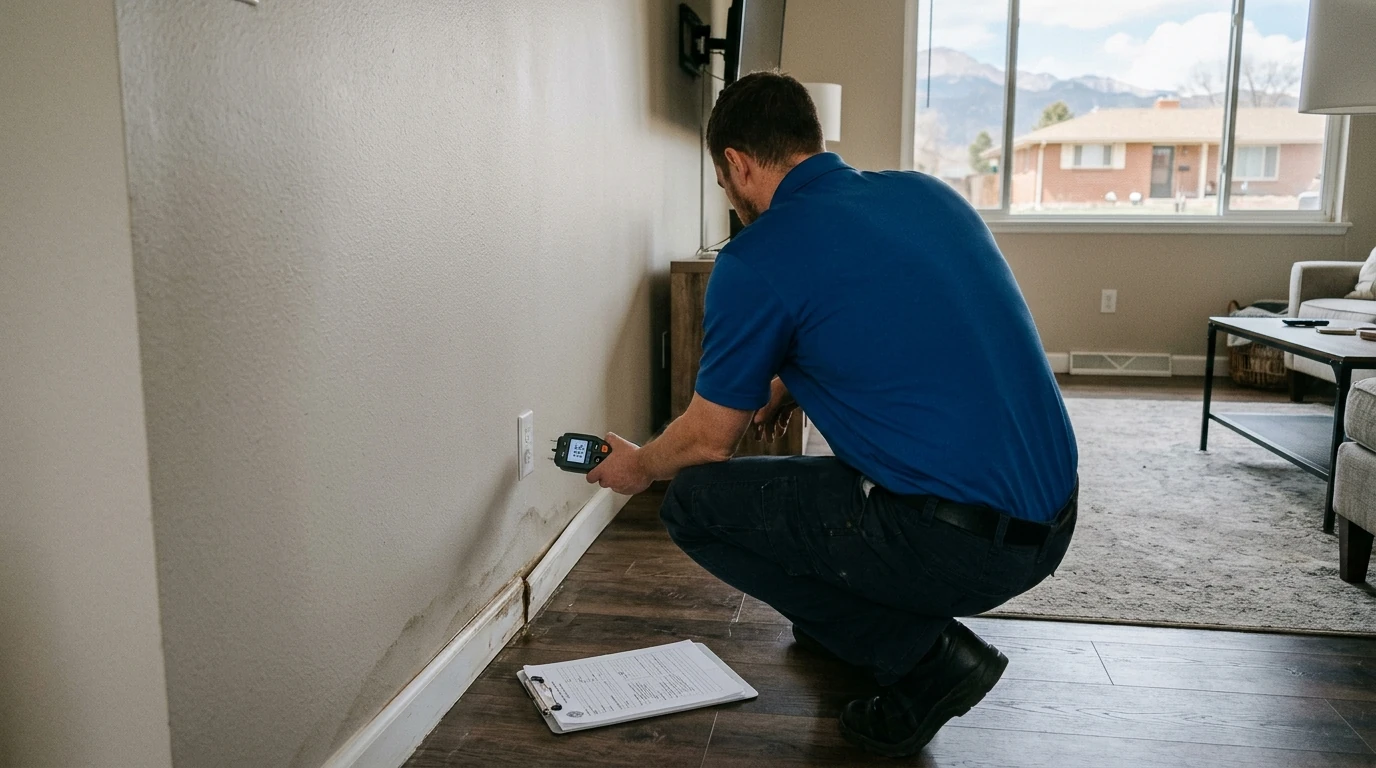
- Assessment and moisture mapping. A technician identifies the water category, checks moisture levels in walls and flooring, and documents the loss for insurance.
- Extraction. Standing water comes out first, using truck-mounted or portable extraction equipment.
- Containment and material removal. Wet drywall, insulation, or flooring that can’t be saved comes out, especially with Category 2 or 3 water.
- Drying. Air movers and LGR dehumidifiers are placed to bring materials back to a dry standard, following the drying classes defined in the S500 standard.
- Monitoring. Moisture readings get checked daily until materials reach a dry standard, usually 3 to 5 days for most residential jobs.
- Final documentation. Dry readings and photos go into the file that supports the insurance claim.
Who Should You Call for Water Cleanup in Colorado Springs?
For a Colorado Springs or Front Range water cleanup, call an IICRC Certified Firm that can document the loss, start extraction fast, and work directly from a written scope. SDU Catastrophe Response is an IICRC Certified Firm answering calls 24/7 across Colorado Springs, Monument, Fountain, and the surrounding Pikes Peak region, with crews trained in water restoration (WRT) and structural drying (ASD).
A fast call matters more than people think. Water that sits overnight near the Old North End or up in colder Monument and Woodland Park, where pipes freeze earlier in the season, moves from a Category 1 cleanup to a more expensive Category 2 job fast. Call SDU Catastrophe Response at (303) 656-9934 to schedule a water cleanup assessment, or see the full water cleanup service page for what’s included.
About SDU Catastrophe Response
SDU Catastrophe Response is an IICRC Certified Firm providing water cleanup, water damage restoration, mold remediation, fire and smoke restoration, storm damage repair, and biohazard cleanup across Colorado Springs and the greater Pikes Peak region, including Monument, Fountain, Security-Widefield, Falcon, Black Forest, Manitou Springs, Woodland Park, and Peyton. This post was prepared with the SDU Catastrophe Response team, whose technicians hold IICRC credentials in water restoration (WRT), structural drying (ASD), mold remediation (AMRT), and fire and smoke restoration (FSRT), and who answer calls 24/7.
Video Transcript
If a pipe bursts in your Colorado basement overnight, the first question is simple: how much will cleanup actually cost? Most Colorado homeowners pay between twelve hundred and seven thousand dollars, depending on how much water, and how contaminated it is. A single clean room might run twelve hundred to three thousand. Sewage or flood cleanup with material removal can reach fifteen thousand or more. The biggest factor is how long the water sat. Wait even a day, and a simple dry-out can turn into a full demolition job. Hardwood floors, plaster, and cabinetry take longer and cost more to dry than carpet and drywall, so materials matter too. Homeowners insurance usually covers sudden accidents, like a burst pipe or failed water heater, but not gradual leaks or wear and tear. Flooding and sewer backups usually need separate coverage, so check your policy now, before you’re standing in water. Your contractor will map the moisture, pull out standing water fast, and remove anything too damaged to save. Then come industrial air movers and dehumidifiers, with daily moisture checks until everything’s documented as fully dry. Fast action protects your home and your claim. Call SDU Catastrophe Response at (303) 656-9934 for a free estimate.