In Colorado Springs, water damage restoration typically costs $3.50 to $8.00 per square foot for mitigation alone (extraction, drying, and sanitizing), with a single-incident job usually landing between $1,500 and $7,500 before any rebuild work. The number moves based on how contaminated the water is, how much square footage got wet, and how many days the drying equipment has to run.
If you’re reading this because a pipe split open during last week’s cold snap, or because a hail-battered roof finally let water through the ceiling, you’re probably staring at a wet floor and wondering whether this is a $1,200 problem or a $15,000 one. The honest answer: it depends on a handful of specific factors, and most of them are things you can see yourself within the first hour.
How Much Does Water Mitigation Cost in Colorado Springs?
Mitigation, the extraction and drying phase, typically runs $3.50 to $8.00 per square foot of affected floor space in the Colorado Springs area. A single wet bedroom or home office usually falls in the lower half of that range; a flooded basement or multiple rooms push toward the top.
Here’s how that typically breaks down by scenario:
| Scenario | Typical Mitigation Cost |
|---|---|
| Single room, clean water (Category 1), caught fast | $1,200 - $2,800 |
| Multiple rooms, Category 1 or 2 water | $2,500 - $5,500 |
| Finished basement flood, 500-800 sq ft | $4,000 - $9,000 |
| Frozen pipe burst with wall cavity saturation | $3,500 - $8,500 |
| Category 3 (sewage or storm water intrusion) | $5,000 - $12,000+ |
| Whole-floor loss, multiple affected rooms | $8,000 - $18,000+ |
These figures cover extraction, antimicrobial treatment, and the drying equipment running for several days. They do not include drywall, flooring, or cabinetry replacement, which is a separate phase. Every loss is different, and a written scope after an in-person assessment is the only way to get a number specific to your home.
What Drives the Final Price: Category of Water, Square Footage, and Drying Days
Three variables move the number more than anything else: what category the water is, how much area it touched, and how many days it takes to dry.
The IICRC S500 standard splits water intrusions into three categories. Category 1 is clean water, a supply line or fresh burst pipe, and it’s the cheapest to remediate because materials can often be dried in place. Category 2, called gray water, comes from sources like a washing machine overflow or a sump pump backup and requires more aggressive sanitizing. Category 3, black water, includes sewage backups and storm floodwater; it almost always means removing porous materials like carpet pad and the bottom few inches of drywall rather than drying them, which adds cost.
Square footage is the second lever. A 200 square foot bedroom costs less to dry than a 1,200 square foot finished basement, simply because more air movers, more dehumidifier capacity, and more labor hours are needed to pull moisture out of a larger space.
Drying days matter because most restoration pricing includes equipment rental per day. A straightforward Category 1 loss in a well-ventilated room might dry in 3 to 4 days. A frozen pipe burst that saturated wall cavities and subfloor, common after a hard Front Range cold snap, can take 5 to 7 days or longer because the moisture has to migrate out of denser materials before the readings drop to dry-standard.
Does Homeowners Insurance Pay for Water Damage Restoration in Colorado?
Most Colorado homeowners policies cover water damage that is sudden and accidental, like a burst pipe or a failed water heater, but exclude damage from long-term leaks or poor maintenance. A frozen pipe that splits during a cold snap is typically a covered peril; a slow drip behind a wall that’s been running for months usually is not.
The distinction insurers make is between sudden discharge and a maintenance issue. Adjusters look for signs of how long water was present, which is why fast mitigation matters for the claim itself, not just the drywall. Our guide to what homeowners insurance actually covers for water damage walks through the specific policy language insurers lean on and what documentation protects a claim.
Most policies also carry a separate deductible for water losses, often $1,000 to $2,500, so smaller jobs sometimes land below what’s worth filing. A documented moisture assessment and a written scope of work, not just an estimate, is what carriers want to see before approving a claim.
What Does the Water Damage Restoration Process Actually Involve?
A typical job moves through four phases, and understanding them explains where the cost comes from.
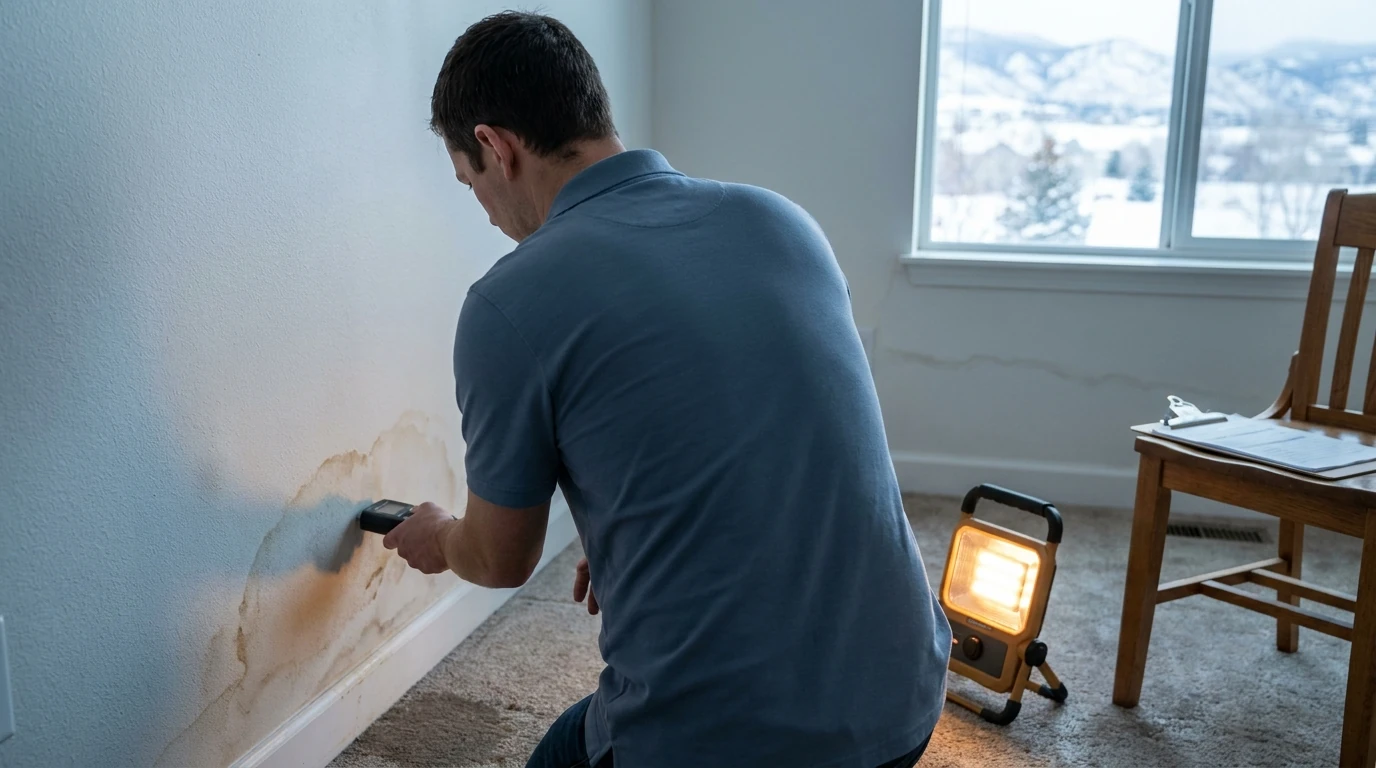
- Assessment and water extraction. A technician uses a moisture meter and thermal imaging to map how far the water traveled, then extracts standing water with truck-mounted or portable pumps.
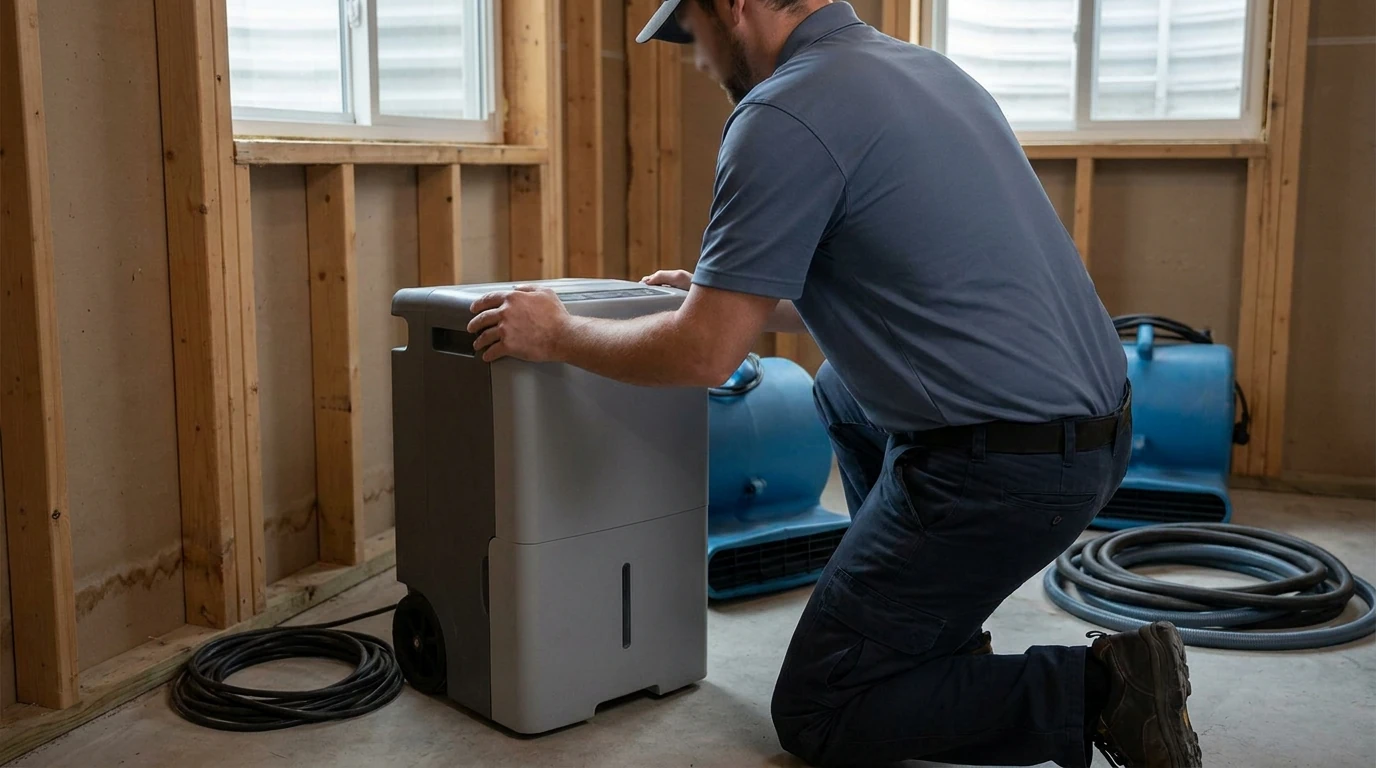
- Structural drying. Air movers and LGR dehumidifiers are positioned to pull moisture out of drywall, subfloor, and framing. Daily moisture readings track progress against dry-standard benchmarks.
- Sanitizing and odor control. Affected surfaces are treated with antimicrobial solution, especially important for Category 2 and 3 water, to prevent mold growth before materials are closed back up.
- Rebuild. Once materials test dry, drywall, insulation, flooring, and trim are replaced. This phase is priced separately from mitigation and varies widely based on finishes.
If you want a plain-language walkthrough of how long each phase typically takes, How Long Does Water Damage Restoration Actually Take? breaks down realistic timelines by loss type.
Who Should You Call After a Frozen Pipe Bursts in Colorado Springs?
Shut off the water at the main valve first, then call a restoration company that can start extraction the same day. The longer standing water sits, especially in an unheated space during a winter cold snap, the more materials end up needing full replacement instead of drying in place.
Neighborhoods from Old Colorado City to Briargate see this pattern every winter: overnight temperatures drop hard, a supply line in an exterior wall or crawlspace freezes, and it splits when the ice thaws enough to let pressure build. The burst pipe emergency checklist covers what to do in the first 30 minutes, before any restoration crew arrives.
SDU Catastrophe Response is an IICRC Certified Firm serving Colorado Springs and the surrounding Front Range communities, and documents every job with photos and moisture logs that support the insurance claim. Call SDU Catastrophe Response at (303) 656-9934 to schedule a water damage assessment and get a written scope before any work begins.
A frozen pipe or a hail-driven roof leak rarely waits for business hours, and the cost of the fix depends almost entirely on how fast the water gets extracted. Getting a technician out to measure moisture and category the water is the step that turns a guess into an actual number.
About SDU Catastrophe Response
SDU Catastrophe Response is an IICRC Certified Firm based in Colorado Springs, Colorado, holding IICRC credentials in Water Restoration (WRT), Applied Structural Drying (ASD), Mold Remediation (AMRT), and Fire & Smoke Restoration (FSRT). The company is licensed and insured and operates 24/7 across Colorado Springs, Monument, Fountain, Security-Widefield, Falcon, Black Forest, Manitou Springs, Woodland Park, and Peyton, handling water damage restoration, water cleanup, mold remediation, fire and smoke damage, storm damage, sewage cleanup, odor removal, biohazard and trauma scene cleanup, and post-construction cleaning.