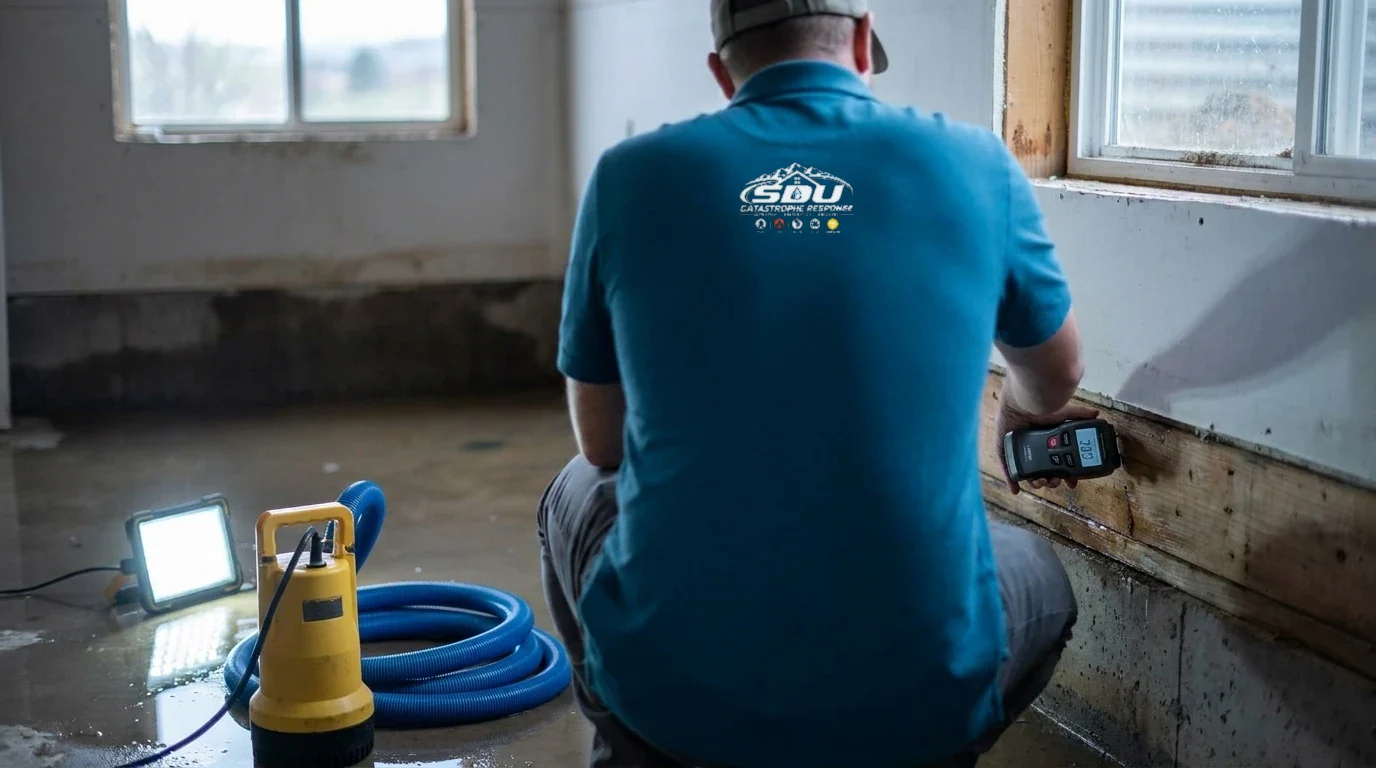
If you just walked downstairs to standing water, the first call is a restoration company, not your insurance agent. For a flooded basement in Colorado Springs, call SDU Catastrophe Response at (303) 656-9934; the crew answers 24/7 and carries IICRC certifications in water mitigation and structural drying. Stopping the water and starting extraction in the first few hours matters more than anything else you do today.
Who do you call first when your basement floods?
Call whoever can stop the water first, then a restoration company. If a supply line or pipe is actively spraying, shut off the main water valve yourself if you can reach it safely, or call a plumber if you can’t find it or it won’t turn. Once the source is stopped, or if the water is coming from groundwater or storm runoff with no valve to shut, the next call is a restoration company that can extract standing water and start drying before the insurance conversation even begins.
If there’s a live electrical hazard, exposed wiring near the water, a breaker panel in the flooded area, or any gas smell, call 911 or your utility company first and stay out of the basement until it’s cleared. Don’t wade into water near an electrical panel to check on things yourself.
Is this a burst pipe or groundwater, and does that changes who you call?
Yes, the source changes who handles the job and what insurance looks at. A burst pipe or supply line failure is usually Category 1 water, relatively clean, and a plumber stops the leak while a restoration company handles extraction and drying. Groundwater, storm runoff, or a sewer backup is a different animal: it’s often Category 2 or 3 water carrying contaminants, and a plumber generally can’t help with the cleanup side at all.
Colorado Springs sees both patterns depending on the season. Winter cold snaps crack pipes in unheated crawlspaces and garages, especially up on the Palmer Divide toward Monument where nights run colder than the Springs proper. Spring snowmelt and summer downpours push water toward foundations in older neighborhoods and along drainage paths near Fountain Creek, which is when sump pumps matter most. If your sump pump failed during a storm and the basement filled with groundwater, that’s a groundwater call, not a plumbing call. Our burst pipe emergency checklist walks through the pipe-specific version of this.
What should you do in the first 30 minutes, before anyone arrives?
Do what’s safe without entering standing water you’re unsure about. If the water is ankle-deep or more and you don’t know its source, treat it as contaminated and stay out.
- Shut off the water source or breaker to the affected area if you can do it safely.
- Move anything on the floor, electronics, boxes, rugs, up onto dry surfaces.
- Photograph the water level, the source if visible, and any damaged contents before you move them.
- Open a window or run a box fan if it’s safe, to start some air movement.
- Call a restoration company rather than waiting to see if it dries on its own; basements hold moisture longer than any other part of the house.
Will homeowners insurance cover a flooded basement?
It depends entirely on the source. A sudden, accidental event like a burst pipe is typically covered under a standard homeowners policy, while water that seeps in from the ground or backs up through a sewer line usually is not, unless you added a specific endorsement. The Insurance Information Institute breaks down this distinction in plain terms, and it’s worth reading before you call your agent.
Groundwater flooding is a flood-insurance question, not a homeowners-policy question, and flood coverage comes through a separate policy under the National Flood Insurance Program. If you’ve never carried flood insurance and your basement just filled with groundwater, that gap is common, and it’s worth understanding before you assume a claim will be paid. Our guide on whether homeowners insurance covers water damage goes deeper into what adjusters actually look for.
How fast does mold grow in a wet basement?
Mold can begin growing within 24 to 48 hours in a warm, damp basement, which is why the drying timeline matters as much as the extraction itself. Basements are already prone to higher humidity and lower airflow than the rest of the house, so wet carpet pad, drywall, or framing left sitting even one extra day gives mold a real head start. The EPA’s mold guidance and the industry drying standard, ANSI/IICRC S500, both point to the same window: get materials dry within 24 to 48 hours or plan on remediation, not just drying. Our post on how quickly mold grows after water damage covers the specific conditions that speed it up.
What happens when you call a restoration company?
A real emergency call starts with questions about the water source, how long it’s been standing, and whether the area is safe to enter, then dispatch of a crew with extraction equipment. Expect to describe the source (burst pipe, sump failure, storm runoff), roughly how much water, and what’s in the basement, finished living space, storage, mechanical equipment.
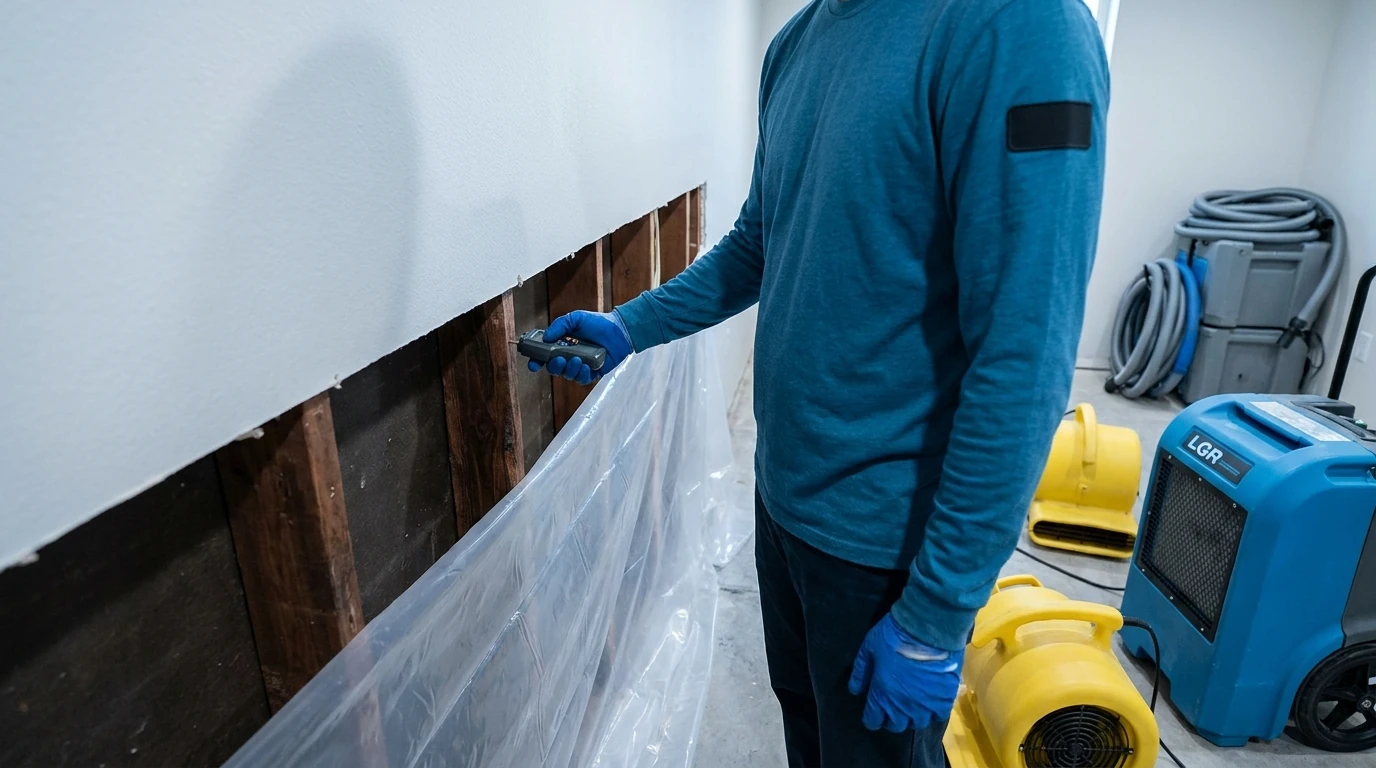
On arrival, the crew typically confirms the water category, extracts standing water with truck-mounted or portable pumps, and sets moisture meters into the framing and subfloor to map how far the water traveled behind walls. Air movers and dehumidifiers go in to start structural drying, and documentation, photos, moisture readings, a written scope, gets built alongside the physical work so it supports an insurance claim if one applies.
How much does basement flood cleanup cost in Colorado Springs?
Most basement flood cleanup jobs in the Colorado Springs area run from a few hundred dollars for a small, contained, clean-water spill to several thousand dollars when a finished basement needs extraction, structural drying, and materials removed. The biggest cost drivers are square footage affected, how long the water sat before anyone called, and whether it’s Category 1 clean water or Category 2 or 3 water requiring more removal. Every basement is different, and a written scope before work begins is the only way to get a real number for your specific situation.
If you’re standing in water right now, start with the basement flooding cleanup page for what the process looks like, or call SDU Catastrophe Response at (303) 656-9934 to get a crew moving while you sort out the insurance side.
About this post: Written with the SDU Catastrophe Response team, an IICRC Certified Firm serving Colorado Springs and the surrounding Front Range since it was founded, operating 24/7 across water, storm, fire, mold, and biohazard response.