For a sewage backup in Colorado Springs, call SDU Catastrophe Response at (303) 656-9934. SDU is an IICRC Certified Firm that answers 24/7 and handles the Category 3 cleanup, drying, and sanitizing once the backup itself has stopped flowing.
That last part matters. A sewage backup is really two problems stacked together: a plumbing problem (why is sewage coming back up) and a contamination problem (now that it’s in my basement, how do I get it out safely). One call usually can’t solve both, so here’s the order that actually works, whether you’re off Old Colorado City or out toward Briargate.
Should I call a plumber or a restoration company first?
Call whichever one matches the problem that’s still active. If sewage is actively rising, gurgling up a drain, or the toilet keeps refilling and overflowing, you need someone to stop the source first: a licensed plumber for a blocked line on your side of the property, or Colorado Springs Utilities if the backup looks like it’s coming from the main line in the street (multiple fixtures backing up at once, or neighbors reporting the same issue, are both signs of a city-side problem).
Once the flow has actually stopped, that’s when a restoration company takes over. Sewage is Category 3 water under the IICRC’s S500 standard, meaning it’s grossly contaminated with bacteria, viruses, and other pathogens. It isn’t something to mop up with a shop vac and bleach. SDU’s crews extract the water, remove contaminated porous materials, and treat the space with EPA-registered antimicrobials before drying begins.
If there’s standing water near an electrical panel, outlets, or a gas appliance, that’s a separate call: shut off power at the breaker if you can do it safely, and if you smell gas, leave the house and call the gas utility or 911 before calling anyone else.
What happens when you call SDU for a sewage backup?
When you call, have the basics ready: where the water is coming from (if known), which rooms are affected, and whether the source has been stopped yet. If it hasn’t, SDU will tell you that a plumber or Colorado Springs Utilities needs to handle that part first, because starting cleanup on an active backup wastes time and money.
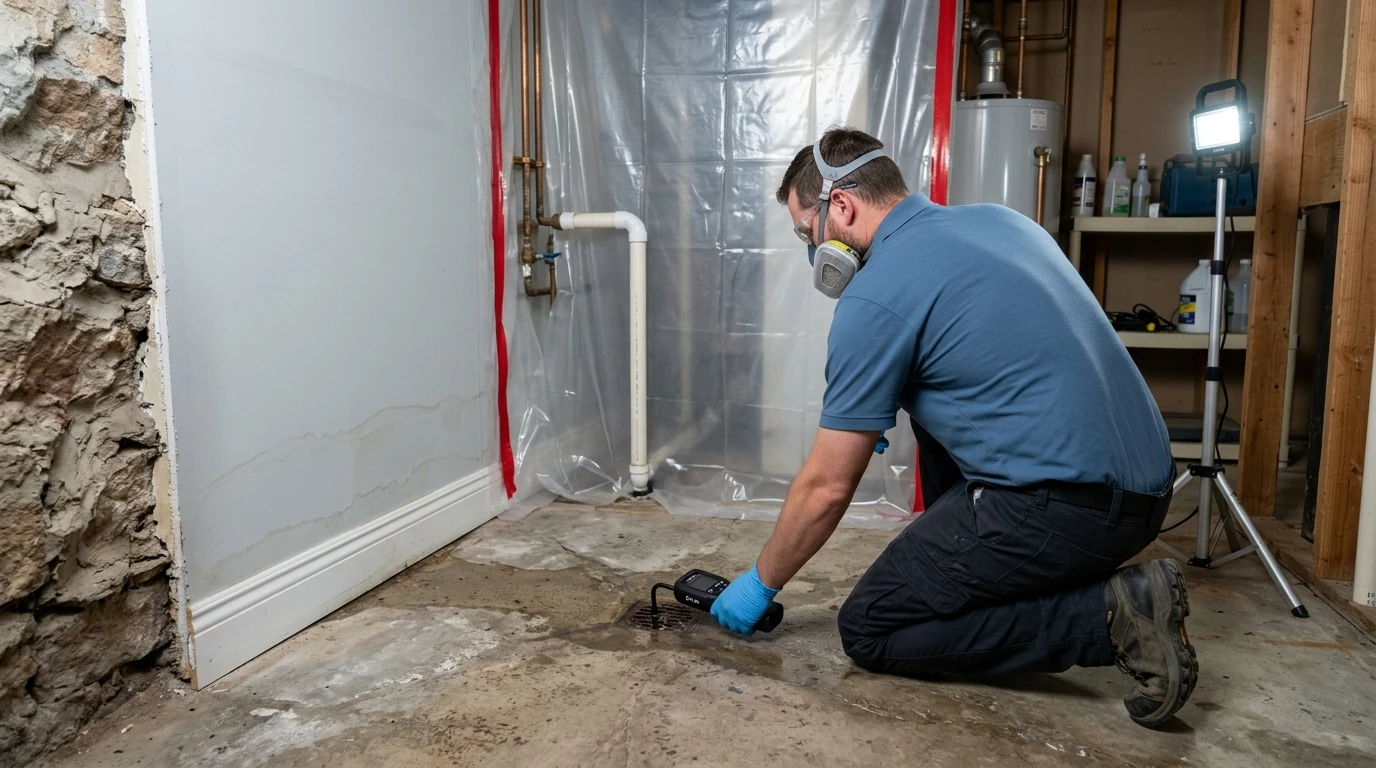
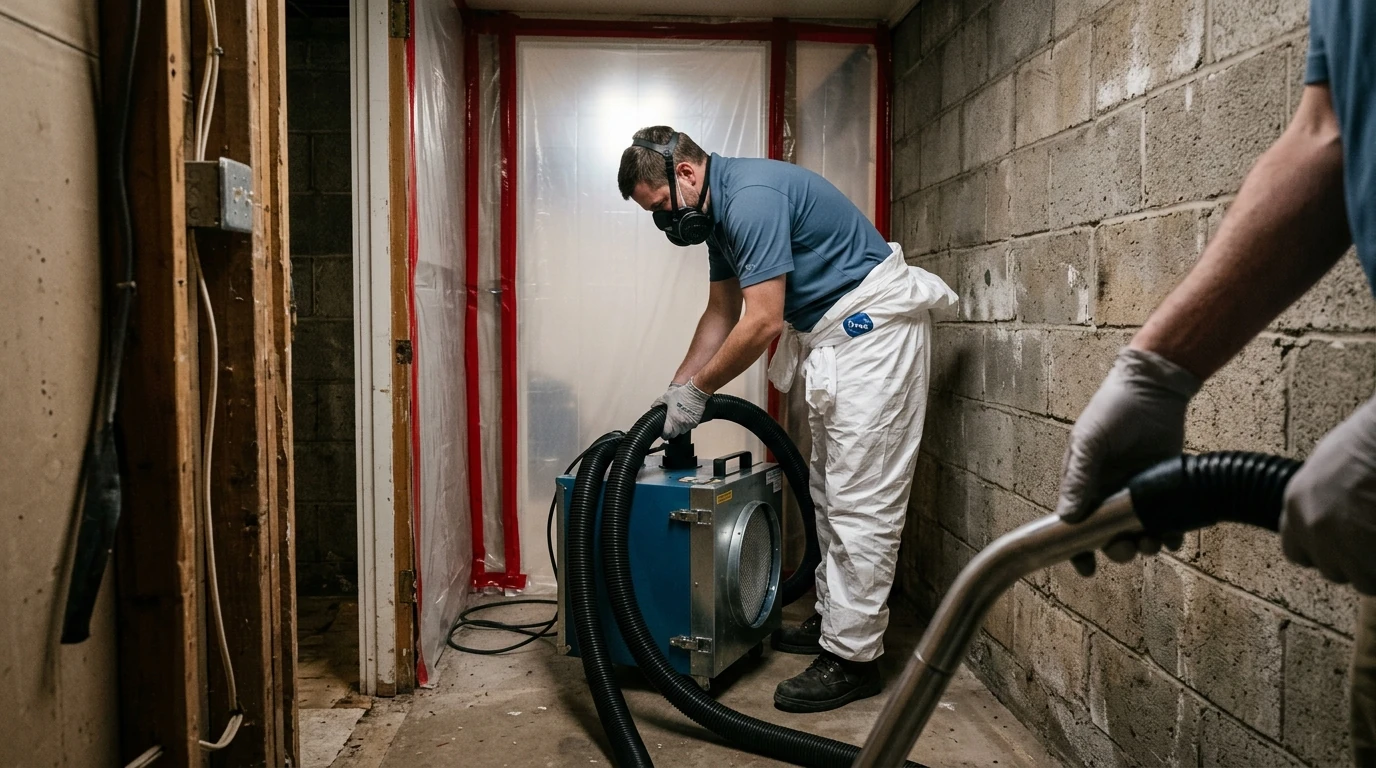
Once the source is stopped, the crew arrives in full PPE, since Category 3 work requires it: gloves, respirators, and often Tyvek suits for anyone in direct contact with the affected area. They’ll set containment to keep contamination from spreading to unaffected rooms, extract standing water, and assess which materials (carpet, pad, drywall, baseboards) can be cleaned and which need to be removed. Non-porous surfaces like tile, concrete, and sealed hardwood can usually be cleaned and disinfected in place; porous materials that soaked up black water generally can’t be saved. SDU photographs and documents everything as they go, which becomes the paper trail your insurance adjuster will ask for. For basements specifically, that scope of work overlaps with basement flooding cleanup; for the lingering smell afterward, odor removal is a separate pass once the space is dry.
Is a sewage backup actually dangerous?
Yes. Category 3 water carries bacteria like E. coli, along with viruses and parasites, and contact or inhalation of aerosolized particles can cause gastrointestinal illness, skin infections, and respiratory irritation. Keep kids and pets out of the affected area, don’t touch contaminated surfaces with bare skin, and avoid running a fan that blows across standing sewage, since that spreads contaminated aerosols into clean rooms. The CDC’s guidance on cleaning safely after a disaster covers the same basics for anyone tempted to handle it themselves before help arrives.
Does homeowners insurance cover sewer backup?
Usually not, unless you’ve added a water backup (sometimes called sewer or sump) endorsement to your policy. A standard homeowners policy typically excludes damage from a sewer or drain backing up, which is different from the sudden pipe burst coverage most policies do include. Insurance Information Institute guidance on homeowners coverage confirms this is a common gap, so check your declarations page for a backup endorsement before assuming you’re covered, and document the damage thoroughly either way. If the claim does get approved, the documentation SDU builds during cleanup, photos, moisture logs, disposal records, is exactly what adjusters ask to see. For the broader rules on what’s covered after water damage generally, see Does Homeowners Insurance Cover Water Damage?
What to do right now
If sewage is actively backing up, stop using drains and toilets on that line, keep everyone away from the affected area, and call a plumber or Colorado Springs Utilities to address the blockage. Once the flow has stopped, call SDU Catastrophe Response at (303) 656-9934 to start the Category 3 cleanup and get the documentation your claim will need. SDU’s crews work throughout Colorado Springs and nearby communities, and their sewage cleanup page has more on what a typical scope of work looks like before you need it.