Mold Inspection and Testing in Colorado Springs
24/7 mold inspection and testing in Colorado Springs and surrounding areas. IICRC-certified, insurance billing accepted. Call (303) 656-9934.
A musty smell that comes and goes with the furnace, a faint discoloration near a window sill that keeps returning after you wipe it down, a family member who starts coughing more at home than anywhere else: these are the quiet signals that prompt a mold inspection, long before anyone sees a visible colony. Mold inspection and testing gives you lab-backed answers about what’s actually in the air and behind the walls, instead of guessing based on a smell or a stain.
What Mold Inspection and Testing actually involves
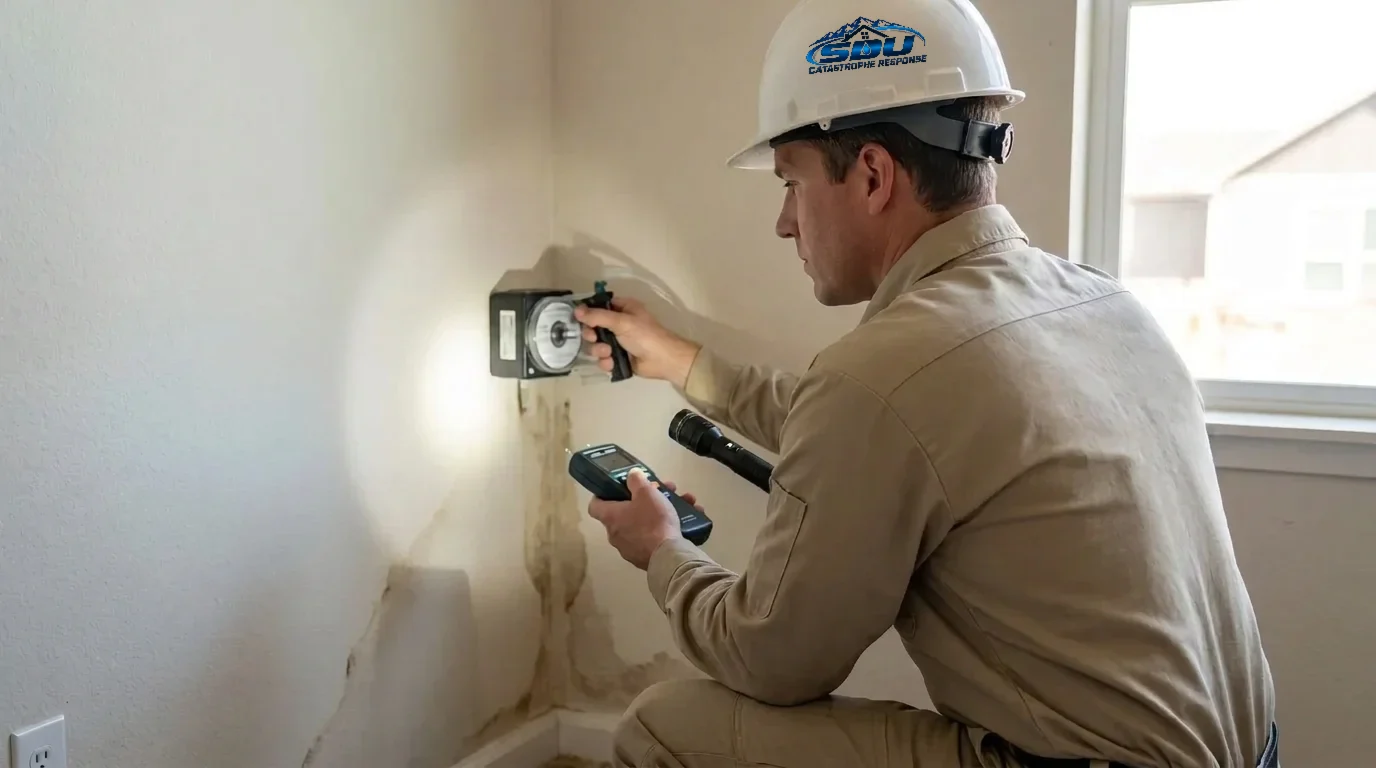
A proper mold inspection starts with a visual and moisture survey of the property, using a moisture meter and often a thermal imaging camera to find damp building materials before they show surface growth. From there, air sampling devices pull a measured volume of air through a cassette to capture mold spores for lab analysis, and surface or tape-lift samples can be taken from suspicious staining or discoloration. A baseline outdoor air sample is nearly always collected too, since spore counts are compared against what’s naturally present outside on that day. Most residential inspections take one to two hours on-site, with lab results for air and surface samples typically returned in three to five business days, depending on the lab’s turnaround options.
Our process
- Intake and history review. We ask about water intrusion history, recent leaks, renovations, and where odors or symptoms are strongest, since this shapes where we look first.
- Moisture mapping. Using moisture meters and thermal imaging, we scan walls, flooring, and ceilings near known or suspected water sources to flag damp assemblies that aren’t yet visibly moldy.
- Sampling. We collect air samples (and surface samples where visible growth exists) using calibrated equipment, plus an outdoor control sample, following IICRC S520 guidance for the inspection and sampling framework.
- Lab analysis. Samples go to a third-party accredited lab for spore identification and counts; we don’t analyze our own samples, which keeps the results independent.
- Written report and recommendations. You get a report showing spore types and concentrations compared to outdoor air, moisture readings by location, and a clear recommendation on whether remediation is warranted and at what scope.
What separates a good mold inspection from a bad one
A rushed inspection skips the moisture mapping step and goes straight to air sampling, which misses hidden damp cavities that haven’t yet produced an airborne spore spike. A thorough inspector tests multiple rooms and compares results against an outdoor baseline rather than relying on a single indoor sample, since spore counts vary naturally by season and by room. Surface sampling matters too: a visible stain can be settled dust or old growth that’s no longer active, and only a sample tells you which. Insurance adjusters reviewing a mold claim look for documented moisture readings tied to a specific water event, lab chain-of-custody paperwork, and a clear link between the water damage and the mold finding, not just a spore count on its own. We report findings plainly, including when testing doesn’t support a remediation recommendation, because an inspection is only useful if it’s independent of the outcome.
What does Mold Inspection and Testing cost?
Every property and every suspected source is different, which is why we provide a written scope of the inspection, sampling locations, and lab fees before any work begins. Homeowners insurance typically covers mold testing only when it’s tied to a covered water loss, such as a sudden pipe burst, rather than long-term humidity or condensation issues the policy treats as a maintenance matter. Typical industry costs for mold inspection and testing look like this:
| Scenario | Typical range |
|---|---|
| Visual inspection only, no sampling | $200 - $400 |
| Inspection plus 2-3 air samples | $400 - $700 |
| Inspection plus air and surface samples, multiple rooms | $700 - $1,200 |
| Whole-house inspection with HVAC sampling | $1,000 - $1,800 |
| Post-remediation clearance testing | $300 - $600 |
Seasonal & regional considerations
Colorado Springs’ dry climate keeps ambient mold pressure lower than in humid regions, but indoor spikes still happen, usually tied to a specific leak, a finished basement with poor ventilation, or a swamp cooler that adds moisture without enough airflow to dry it back out. Winter heating season is a common trigger window, since closed-up homes with running furnaces trap any existing moisture indoors with less fresh-air exchange. If an inspection points to active growth, that’s a job for mold remediation, which we also handle, with containment and clearance testing to confirm the space is clean afterward.
Service area
We provide mold inspection and testing throughout Colorado Springs and the surrounding Pikes Peak region, including Monument, Fountain, Woodland Park, and Falcon.
If something in your home doesn’t add up, a lingering smell, a stain that won’t quit, a room that always feels damp, request an air quality test and get a lab-backed answer instead of a guess.
Frequently Asked Questions
Does homeowners insurance cover mold inspection and testing?
What's the difference between air sampling and surface sampling?
How long does it take to get mold test results back?
Can a mold inspection tell me if my home is safe to live in?
Do I need to leave the house while the inspection is happening?
Looking for the best mold inspection and testing company in Colorado Springs?
SDU Catastrophe Response provides mold inspection and testing in Colorado Springs, CO and the surrounding area. We answer calls 24/7 — call (303) 656-9934 for immediate help.
Need Mold Inspection and Testing now?
We respond 24/7 across Colorado Springs and surrounding CO cities.