Reconstruction Services in Colorado Springs
24/7 reconstruction services in Colorado Springs and surrounding areas. IICRC-certified, insurance billing accepted. Call (303) 656-9934.
When a water, fire, or storm loss tears into drywall, framing, or flooring, the demolition and drying crews eventually leave, and what’s left is a structural gap: open stud bays, subfloor exposed to the joists, a kitchen with no cabinets. Reconstruction Services is the work that closes that gap, turning a mitigated loss back into a livable, code-compliant space. This isn’t cosmetic patchwork; it’s framing, permitting, and finish work tied directly to what the original damage removed.
What Reconstruction Services actually involves
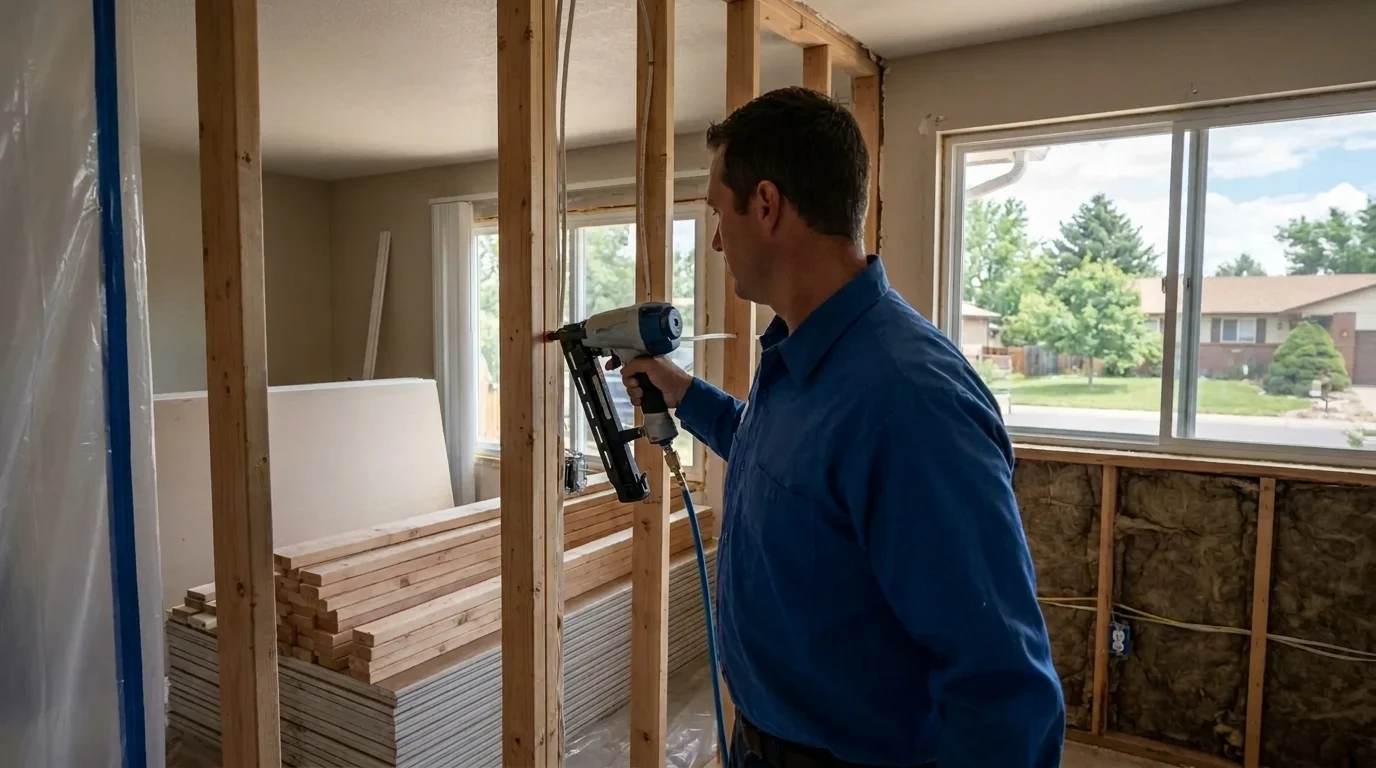
Post-damage reconstruction picks up where mitigation ends. Depending on the loss, that might mean replacing a few feet of baseboard and repainting a wall, or it might mean reframing load-bearing sections, running new electrical and plumbing rough-in, and rebuilding a kitchen or bathroom from the subfloor up. Structural reconstruction work on a fire or flood loss typically touches framing lumber, subflooring, drywall, insulation, trim, flooring, and paint, in roughly that order, because each layer depends on the one beneath it being inspected and signed off first.
Timelines vary enormously by scope. A single-room drywall and paint job might wrap in a week. A post-disaster rebuild involving structural framing, electrical rough-in, and multiple finish trades can run several weeks to a few months, largely driven by permit review time and material lead times rather than labor itself.
Our process
- Scope of work and written estimate. Before any material is ordered, we document the extent of the loss, specify what has to be replaced versus repaired, and put the plan in writing so you and your adjuster are looking at the same scope.
- Permits and code compliance. Structural, electrical, and plumbing work typically requires permits through the local building authority. We pull the required permits and build to current code, which sometimes means upgrades beyond simply restoring what was there before.
- Framing and rough-in. Damaged studs, joists, or subfloor are replaced first. Electrical, plumbing, and HVAC rough-in happens before any wall is closed up, and this stage usually requires an inspection before we move forward.
- Insulation, drywall, and finishes. Once rough-in passes inspection, we insulate, hang and finish drywall, then move into trim, flooring, cabinetry, and paint, matching existing finishes where the loss was partial rather than total.
- Final walkthrough and punch list. We walk the space with you, note anything that needs adjustment, and close out permits with the final inspection before calling the job complete.
What separates a good reconstruction response from a bad one
The most common mistake in post-disaster rebuilding is starting finish work before the structure underneath has actually dried and been verified. Framing lumber that reads dry at the surface can still be holding moisture deeper in the member, and closing drywall over it invites the exact problem the original mitigation was supposed to prevent. A careful reconstruction team confirms moisture content against IICRC S500 drying standards before framing is closed, not just before demolition started.
The second common failure is scope mismatch with the insurance estimate. Adjusters look closely at whether replacement materials, square footage, and labor line up with what was actually damaged, and gaps here are where claims stall. A documented, itemized scope of work, tied to photos and moisture readings from the mitigation phase, is what keeps reconstruction moving instead of sitting in review.
Code compliance is the third pressure point. Older homes in the region sometimes require electrical or structural upgrades to meet current code during a rebuild, even if the original construction was legal when built. Skipping that step to save time creates problems at final inspection, not before.
What does Reconstruction Services cost?
Reconstruction costs depend entirely on how much of the structure was affected, what trades are involved, and local material and permit costs. These are typical industry ranges, not a quote: every loss is different, and SDU Catastrophe Response provides a written scope of work before any reconstruction begins.
| Scenario | Typical range |
|---|---|
| Single room drywall, paint, trim | $2,000 - $5,000 |
| Flooring replacement, multiple rooms | $5,000 - $15,000 |
| Kitchen rebuild after fire or water loss | $15,000 - $40,000 |
| Framing and finish after structural damage (single room) | $20,000 - $60,000 |
| Whole-floor reconstruction after major loss | $75,000 - $150,000+ |
Homeowners insurance typically covers reconstruction costs tied directly to a covered peril, such as fire, burst pipes, or storm damage, though code-upgrade coverage and policy limits vary by carrier and policy.
Seasonal & regional considerations
Colorado Springs sits at altitude with a dry climate and wide temperature swings between day and night, which affects how lumber, drywall compound, and paint cure on a job site, sometimes extending finish timelines slightly compared to lower, more humid regions. The area’s clay-heavy soils also mean foundation and framing work occasionally needs closer attention to moisture and grading than rebuilds in other parts of the state. Permits for structural and electrical work are issued through the regional building authority covering El Paso County, and inspection scheduling can affect how quickly a rebuild moves from rough-in to finish.
Service area
SDU Catastrophe Response handles reconstruction work across Colorado Springs and the surrounding Pikes Peak region, including homes and commercial properties in neighboring communities throughout El Paso County.
If a loss has left you with an open wall, a gutted kitchen, or a structure waiting on permits, get a reconstruction scope of work started so you know exactly what rebuilding the space will involve and cost before any work begins.
Frequently Asked Questions
Does homeowners insurance cover reconstruction services?
How soon after demolition does reconstruction start?
Who writes the scope of work, you or the insurance adjuster?
Do you handle the permits required for reconstruction?
Can you match new materials to what was there before the damage?
Looking for the best reconstruction services company in Colorado Springs?
SDU Catastrophe Response provides reconstruction services in Colorado Springs, CO and the surrounding area. We answer calls 24/7 — call (303) 656-9934 for immediate help.
Need Reconstruction Services now?
We respond 24/7 across Colorado Springs and surrounding CO cities.