24/7 Emergency Smoke Damage Restoration in Colorado Springs
24/7 emergency smoke damage restoration in Colorado Springs and surrounding areas. IICRC-certified, insurance billing accepted. Call (303) 656-9934.
Smoke damage emergency in Colorado Springs? Call now, we answer 24/7. Smoke doesn’t stay where the fire was. Within hours of a kitchen fire, a wildfire smoke event, or a furnace puff-back, acidic soot particles work their way into drywall pores, HVAC ductwork, and fabric fibers throughout the house, well beyond the room where the flames were. The longer that residue sits, the more it etches metal, yellows finishes, and bonds itself into porous surfaces, turning a same-week cleanup into a full-scale remediation.
What Smoke Damage Restoration actually involves
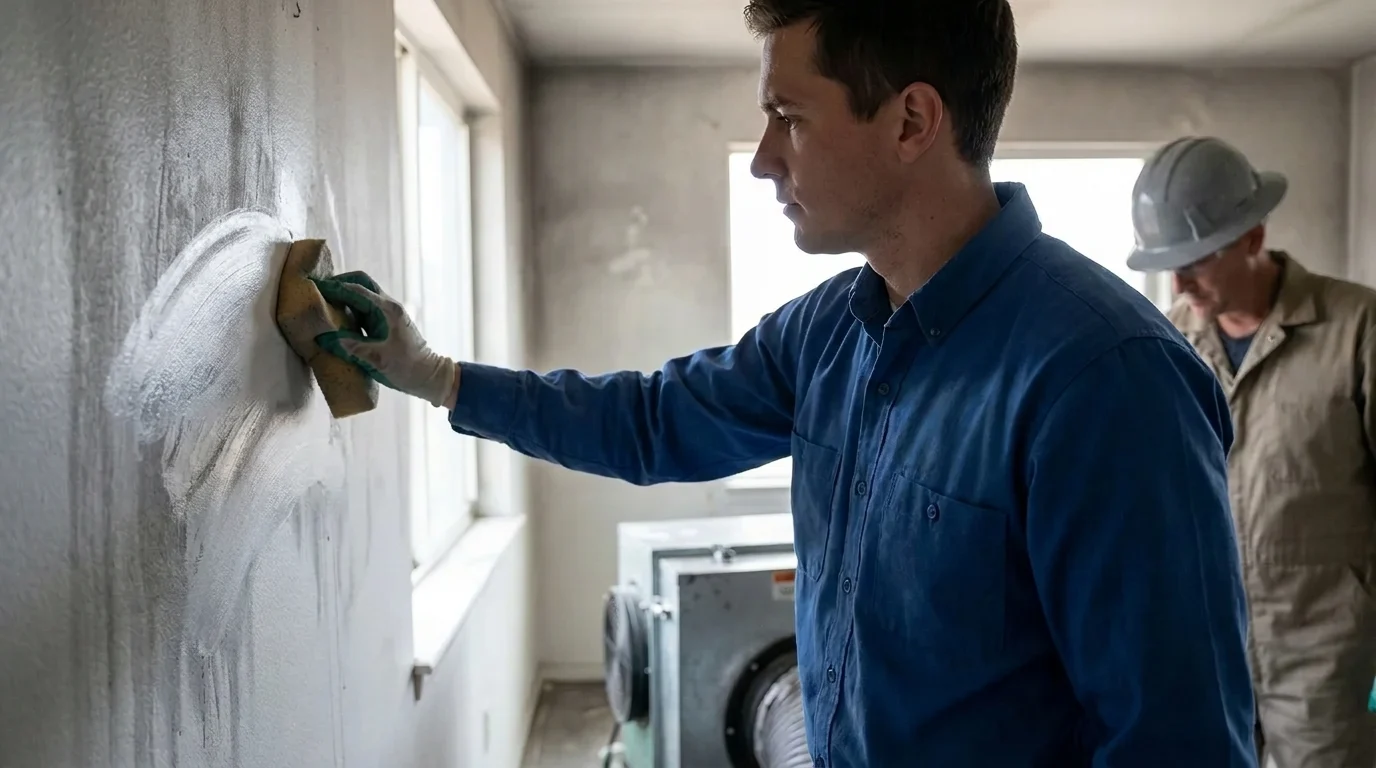
Smoke damage restoration is a separate discipline from fire damage repair, even though the two often happen together. Where fire repair deals with charred structure, smoke work deals with the residue, gas, and odor that travels on air currents into rooms the fire never touched. Our crews use HEPA air scrubbers, thermal foggers, and ozone or hydroxyl generators depending on how deep the odor has penetrated, along with manual cleaning for hard surfaces and specialized agitation for upholstery, carpet, and drapery. A single-room kitchen fire with light residue might clear in a few days. A whole-house event involving synthetic materials, HVAC contamination, or wildfire smoke infiltration through attic vents can take one to two weeks, partly because odor-causing particles have to be chased out of wall cavities and duct runs, not just wiped off visible surfaces.
Our process
- Soot characterization. We identify whether the residue is dry (protein-based, from fast-burning wood or paper) or wet/oily (synthetic, from plastics and foam), because the cleaning agents and pressure used differ significantly between the two.
- Containment and HVAC isolation. We seal off affected zones and shut down or isolate the HVAC system so soot and odor don’t recirculate into unaffected rooms during cleanup.
- Surface and content cleaning. Walls, ceilings, hard surfaces, and salvageable contents are cleaned with soot-specific solvents and techniques matched to the residue type identified in step one.
- Odor neutralization. Thermal fogging, ozone, or hydroxyl treatment is applied to reach the same spaces the smoke reached, inside wall cavities, duct runs, and insulation, not just the surfaces you can see.
- Final verification. We walk the property with you to confirm odor and visible residue are resolved before closing out the job, and document conditions for your insurance file.
What separates a good smoke damage response from a bad one
The most common mistake in smoke cleanup is treating it as a surface-cleaning job. Wiping down walls and running an air freshener might mask odor for a few days, but if soot is still embedded in duct insulation or behind baseboards, it comes back, often worse, once humidity rises or the HVAC kicks on. A thorough response tests and treats the HVAC system as part of the job, not an afterthought, and distinguishes between protein and synthetic soot before choosing a cleaning method, since using the wrong agent can set residue permanently into porous materials.
Insurance adjusters scrutinizing a smoke claim typically look for documented pre- and post-cleaning readings (often with a soot-detection or odor-testing method), itemized content cleaning versus replacement decisions, and clear photographic evidence of residue in secondary spaces like closets and ductwork, not just the room of origin. Jobs that skip this documentation tend to get disputed on scope or paid out short.
What does Smoke Damage Restoration cost?
Costs vary with how far the smoke traveled, what materials absorbed it, and whether HVAC decontamination is needed. The ranges below reflect typical industry figures for this type of work, not a quote, every loss gets a written scope from us before any work begins so you know what’s included and why.
| Scenario | Typical range |
|---|---|
| Single room, light surface residue | $500 - $1,500 |
| Single room, heavy soot with odor | $1,500 - $4,000 |
| Multi-room smoke spread | $4,000 - $10,000 |
| Whole-house smoke and HVAC contamination | $10,000 - $25,000+ |
| Contents cleaning (per room, fabrics/upholstery) | $300 - $900 |
Homeowners insurance typically covers smoke damage restoration when the fire or smoke event is a covered peril under the policy, though coverage for contents cleaning versus replacement can vary by carrier and policy language.
Seasonal & regional considerations
Colorado Springs sits close enough to forested terrain and grassland that wildfire smoke infiltration is a recurring concern during dry, windy stretches, even for homes nowhere near an active fire line. Smoke can work into attic vents and soffits on homes with the area’s common wood-frame construction, settling into insulation long after the air outside looks clear. Low regional humidity also means odor particles can stay airborne and resettle longer than they would in a more humid climate, which is part of why odor-neutralization steps matter here more than a quick wipe-down.
Service area
We provide smoke damage restoration throughout Colorado Springs and the surrounding region, including Monument, Fountain, Woodland Park, and nearby communities along the Front Range.
If smoke from a fire, a furnace malfunction, or a nearby wildfire has moved through your home, don’t wait on odor to “air out” on its own. Call (303) 656-9934 to begin smoke and soot removal before residue sets permanently into your walls, ductwork, and belongings.
Frequently Asked Questions
Does homeowners insurance cover smoke damage restoration?
How is smoke damage cleanup different from fire damage repair?
Can you remove smoke odor without replacing everything?
Why does my house still smell like smoke days after the fire was out?
What's the difference between protein soot and synthetic soot?
Looking for the best smoke damage restoration company in Colorado Springs?
SDU Catastrophe Response provides smoke damage restoration in Colorado Springs, CO and the surrounding area. We answer calls 24/7 — call (303) 656-9934 for immediate help.
Need Smoke Damage Restoration now?
We respond 24/7 across Colorado Springs and surrounding CO cities.