24/7 Emergency Water Heater Flood Cleanup in Colorado Springs
24/7 emergency water heater flood cleanup in Colorado Springs and surrounding areas. IICRC-certified, insurance billing accepted. Call (303) 656-9934.
Water heater flood cleanup in Colorado Springs? Call now, we answer 24/7. A failed water heater doesn’t always announce itself with a dramatic burst. More often it’s a slow weep from a corroded tank seam that soaks into drywall and subfloor for days before anyone notices the stain, or a tank that finally gives out overnight and empties 40-50 gallons across a utility room, hallway, and whatever sits downstairs. Either way, the clock on water damage starts the moment the tank fails, not when you find it.
What Water Heater Flood Cleanup actually involves
Water heater failures fall into a few patterns, and each changes the cleanup. A slow tank leak usually means Category 1 water (clean, from the supply side) that has had time to wick into porous materials, so the visible puddle is the small part of the problem. A full tank rupture or blown pressure relief valve releases a large volume fast, often Category 1 but sometimes carrying sediment and mineral buildup from the tank itself, which changes how surfaces need to be cleaned. If the water heater sits in a basement or on a floor above living space, you’re also dealing with gravity: water finds the path downward through floor penetrations, around plumbing chases, and into wall cavities below.
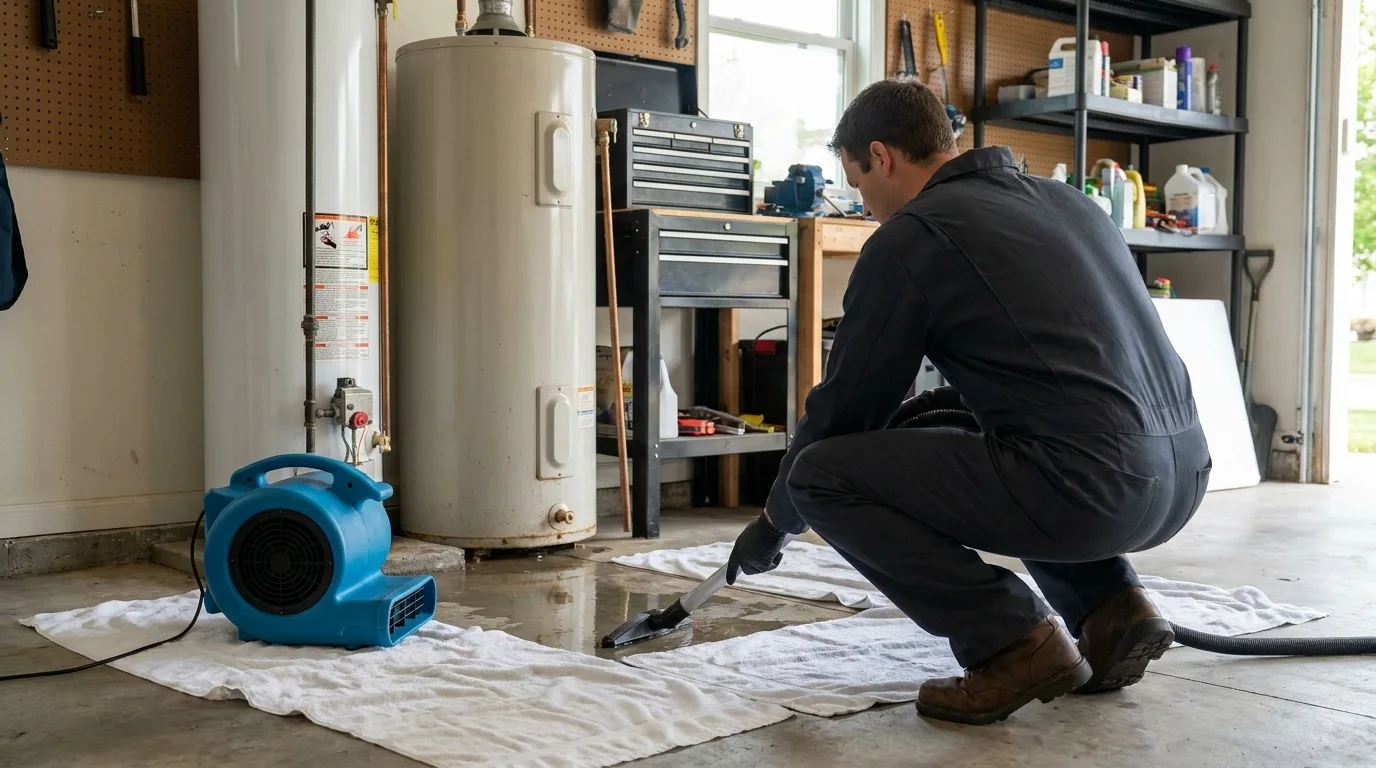
The work starts with cutting water and, if needed, power or gas to the unit so the situation stops getting worse. From there it’s extraction of standing water, moisture mapping with a meter to find out how far the water traveled into subfloor, baseboards, and drywall, and then placement of air movers and dehumidifiers sized to the affected square footage. Flooring and cabinetry near the unit often need to come up or out if they’ve absorbed water past the point of effective drying. Most residential jobs run several days of monitored drying before materials read dry on a meter, not just dry to the touch.
Our process
- Source control and safety check. Confirm the water heater is shut off at the supply line, and check for gas or electrical hazards before anyone steps into standing water.
- Extraction and initial moisture mapping. Pull standing water, then use moisture meters to trace how far it traveled under flooring, behind baseboards, and into adjacent rooms or the floor below.
- Material assessment. Determine what’s salvageable with drying versus what needs to come out, including subfloor near the tank base, baseboards, and any cabinetry that sat in water.
- Structural drying and monitoring. Set air movers and dehumidifiers, then return on a schedule to re-check moisture readings until materials are dry per IICRC S500 guidelines, not just visually dry.
- Documentation for your claim. Photograph the tank, the water path, and all affected materials at each stage so your insurance carrier has a clear record of cause and extent.
What separates a good water heater flood response from a bad one
The most common mistake is treating the visible puddle as the whole job. Water from a leaking or burst water heater travels under flooring and behind walls well past where it’s visible on the surface, and if drying equipment only covers the wet-looking area, the hidden pockets stay damp long enough for mold to start, often within 24-48 hours in a closed space. A second mistake is skipping moisture meter documentation. Adjusters want numbers, not just “it looked dry,” and a cleanup with no moisture logs is harder to support if the claim gets questioned later. We also check whether the tank’s age and failure mode suggest sediment or mineral content in the water, which affects whether materials need cleaning in addition to drying.
What does Water Heater Flood Cleanup cost?
Every water heater loss is different depending on tank size, how long the leak went undetected, and how many rooms or floors it reached, so SDU Catastrophe Response provides a written scope before any work begins. Homeowners insurance typically covers sudden water heater failures (a burst tank or valve) as a covered peril, though slow leaks that went unnoticed for an extended period can be scrutinized more closely for maintenance-related exclusions. The ranges below are typical industry figures, not a quote.
| Scenario | Typical range |
|---|---|
| Small leak, single room, caught early | $800 - $2,200 |
| Tank burst, multiple rooms, clean water | $2,500 - $6,000 |
| Water heater in basement, water spread to finished space below | $4,000 - $10,000 |
| Flooring and cabinetry replacement needed | $1,500 - $5,000 (in addition to drying) |
| Extended undetected leak with subfloor damage | $6,000 - $15,000+ |
Seasonal & regional considerations
Colorado Springs winters put extra strain on water heaters, especially units in unheated garages or crawlspaces where temperature swings accelerate tank corrosion and valve wear. Older homes throughout the region, particularly those with original tanks from a prior owner, are more likely to fail without warning since most tanks have a limited service life regardless of how well they’re maintained. If your water heater sits above a finished basement, a failure here carries extra risk simply because of how far water can travel downward before anyone notices.
Service area
SDU Catastrophe Response handles water heater flood cleanup throughout Colorado Springs and the surrounding region, including homes in neighborhoods with aging water heater installations and basements prone to collecting runoff from upper floors.
If your water heater has failed or you’ve found water pooling near the unit, don’t wait for it to dry on its own. Call (303) 656-9934 to schedule your moisture assessment and get a written scope before the water spreads any further.
Frequently Asked Questions
Does homeowners insurance cover water heater flood cleanup?
How do I know if my water heater leak reached the subfloor or just the surface?
How long does drying take after a water heater floods a utility room or basement?
Can I keep using the area while the water heater is being repaired or replaced?
What should I do immediately after discovering a leaking or burst water heater?
Looking for the best water heater flood cleanup company in Colorado Springs?
SDU Catastrophe Response provides water heater flood cleanup in Colorado Springs, CO and the surrounding area. We answer calls 24/7 — call (303) 656-9934 for immediate help.
Need Water Heater Flood Cleanup now?
We respond 24/7 across Colorado Springs and surrounding CO cities.