Water Leak Detection in Colorado Springs
24/7 water leak detection in Colorado Springs and surrounding areas. IICRC-certified, insurance billing accepted. Call (303) 656-9934.
A water bill that jumped for no reason, a warm patch on the basement floor, a musty smell behind a closet wall with no visible stain: these are the quiet signals of a leak that hasn’t announced itself yet. Water Leak Detection finds the source before it turns into a cut-open wall, a buckled floor, or a mold colony growing in a cavity nobody checks. It’s diagnostic work, done with equipment that reads moisture and temperature differences instead of guessing where to cut drywall.
What Water Leak Detection actually involves
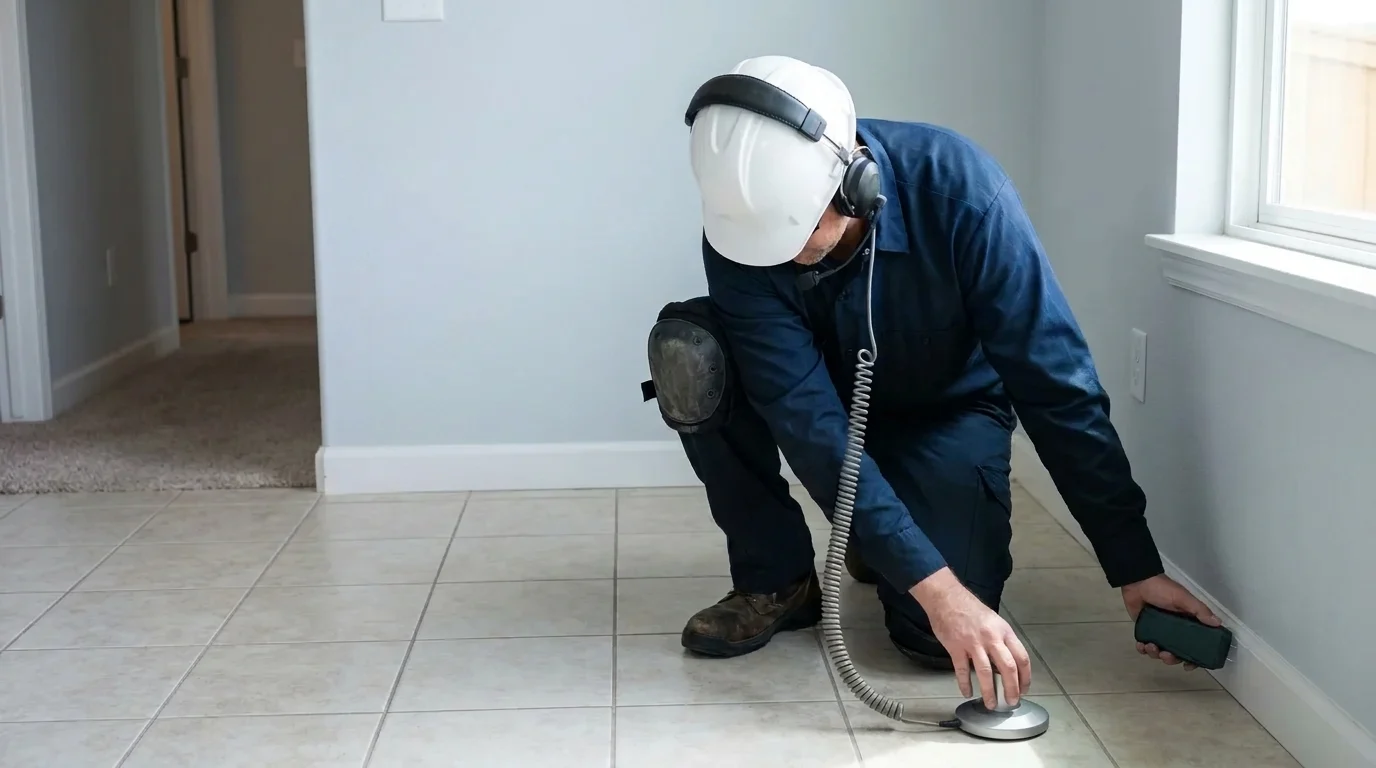
Most hidden leaks fall into a few categories: a slab leak under a concrete foundation, a supply line leaking inside a wall cavity, a failing fitting behind a tub surround, or a slow drip at a water heater connection that’s been soaking a subfloor for weeks. None of these are visible from the surface until the damage is already extensive, which is why detection relies on non-invasive tools rather than demolition. Our technicians use thermal imaging cameras to spot temperature anomalies in walls and floors, moisture meters to confirm whether a reading is a leak or ordinary humidity, and acoustic listening equipment that picks up the sound of pressurized water moving through pipe or escaping into slab or soil. For suspected slab leaks, pressure testing on the plumbing system narrows down whether the loss is on the supply side or the drain side before anyone touches the concrete. A typical inspection takes one to three hours depending on the size of the home and how many areas are in question.
Our process
- Symptom intake. We start with what you’ve noticed: a sound of running water with every fixture off, a spike in the utility bill, a soft or warm spot on the floor, or a smell that comes and goes. This narrows the search area before any equipment comes out.
- Non-invasive scanning. Thermal imaging and moisture meters sweep the suspected zone, wall by wall or slab section by section, to find where readings deviate from the surrounding material.
- Pinpointing the source. Where thermal and moisture data point to a likely spot, acoustic equipment and, for slab leaks, pressure isolation testing confirm the exact location before any cutting or drilling happens.
- Documentation and scope. You get a written report with photos, moisture readings, and the identified source location. This is the same documentation an insurance adjuster or a plumber will need to act on the finding.
- Handoff or repair coordination. If the leak has already caused water damage, our water damage and structural drying teams can take over drying and repair. For the plumbing repair itself, we point you to the right next step rather than overstating what detection alone resolves.
What separates a good water leak detection response from a bad one
The most common mistake is guessing. A contractor who opens drywall based on where water happens to be pooling, without confirming the actual source with a moisture meter or thermal camera, can cut into three walls and still miss the leak, because water travels along framing and finds the lowest point, not necessarily the point closest to where it entered. A second mistake is confusing condensation with an active leak: a cold water line in a humid crawlspace will read wet on a meter without any failure in the pipe, and treating that as a leak wastes time and money. Insurance adjusters pay close attention to how clearly the point of origin is documented, because the source determines whether the loss is covered and how the claim gets categorized. A detection report with thermal images, moisture readings, and a specific location holds up; a verbal description of “somewhere near the kitchen” does not.
What does Water Leak Detection cost?
Costs vary with the size of the home, how many areas need scanning, and whether the suspected leak is in an accessible wall or under a slab. Every property and every leak is different, which is why we provide a written scope of findings before any repair work begins. Homeowners insurance typically covers the cost of detection when it’s tied to an active covered loss, though policies vary on whether detection alone is reimbursed versus the resulting water damage repair.
| Scenario | Typical range |
|---|---|
| Single fixture or wall leak detection | $200 - $500 |
| Whole-house leak investigation | $400 - $900 |
| Slab leak detection with pressure testing | $500 - $1,200 |
| Leak detection bundled with moisture mapping for a claim | $600 - $1,500 |
Seasonal & regional considerations
Colorado Springs sees sharp freeze-thaw swings through the winter months, and pipes in unheated crawlspaces or exterior walls are more likely to crack or develop pinhole leaks after a hard freeze. The region’s dry climate can also work against homeowners: low humidity speeds up evaporation at the surface, so a slow leak inside a wall can read dry on the drywall face while the stud bay behind it stays saturated. Expansive clay soils common along the Front Range also contribute to slab movement that can stress buried plumbing lines over time, which is part of why slab leak detection is a recurring call in older neighborhoods with original cast iron or copper supply lines.
Service area
We provide water leak detection across Colorado Springs and the surrounding Front Range communities, including Monument, Fountain, Woodland Park, and Manitou Springs.
If something about your water bill, your floor, or a smell in a closet doesn’t add up, schedule a water leak detection inspection before it turns into a drywall or flooring project. Call (303) 656-9934 to get a technician and a thermal camera on-site.
Frequently Asked Questions
Does homeowners insurance cover water leak detection?
How do you find a leak without cutting into walls or floors?
What is a slab leak and how is it detected differently?
What are the signs I might have a hidden water leak?
What happens after the leak is found?
Looking for the best water leak detection company in Colorado Springs?
SDU Catastrophe Response provides water leak detection in Colorado Springs, CO and the surrounding area. We answer calls 24/7 — call (303) 656-9934 for immediate help.
Need Water Leak Detection now?
We respond 24/7 across Colorado Springs and surrounding CO cities.