TL;DR: In Colorado Springs, mold remediation typically costs $600 to $4,000 for a single contaminated room and $4,000 to $10,000 or more for a flooded basement or multi-room job. The biggest price drivers are square footage, containment level, and how much porous material (drywall, insulation, carpet) has to come out. A mold inspection with lab testing runs $300 to $800 separately. Every job is different, so a written scope after an on-site assessment is the only way to get an exact number.
If you noticed a musty smell in a basement after last spring’s snowmelt, or you’re staring at dark spotting on drywall after a slow leak behind a washing machine in Old Colorado City or Broadmoor, you’re probably trying to figure out what this is actually going to cost before you call anyone. The honest answer is: it depends on how far the contamination spread and what has to be removed to get rid of it, not just the square footage of the room.
How much does mold remediation cost in Colorado Springs?
Most Colorado Springs homeowners pay between $600 and $10,000 for mold remediation, with the number landing on the low end for an isolated bathroom or closet and the high end for a flooded crawl space or basement with extensive drywall and insulation removal. Whole-structure jobs involving attics, wall cavities across multiple rooms, or reconstruction after removal can run $10,000 to $25,000 or more.
The spread is wide because mold remediation isn’t priced like a flat-rate service. A crew pricing a 4-square-foot patch behind a toilet is doing a fundamentally different job than a crew tearing out 400 square feet of wet drywall and subfloor after a frozen pipe burst over a holiday weekend, a common call in Monument and Woodland Park during a Front Range cold snap. Below is a rough scenario breakdown based on typical industry ranges for this region.
| Scenario | Typical Cost Range |
|---|---|
| Small isolated area (under 10 sq ft, no containment needed) | $600 - $1,500 |
| Single room, moderate growth (10-100 sq ft, Level 2 containment) | $1,500 - $4,000 |
| Crawl space mold remediation | $2,500 - $6,500 |
| Basement or multi-room job after flooding (100-500 sq ft) | $4,000 - $10,000 |
| HVAC or duct contamination | $2,000 - $5,000 |
| Large-scale structural remediation with reconstruction | $10,000 - $25,000+ |
A mold inspection with air and surface sampling, done separately from remediation, typically runs $300 to $800 depending on how many samples get sent to a lab.
What drives the price of mold removal?
The price moves on four things: how much square footage is affected, what containment level the job requires, how much porous material has to be removed versus cleaned in place, and whether the moisture source is still active. Everything else is a variation on those four.
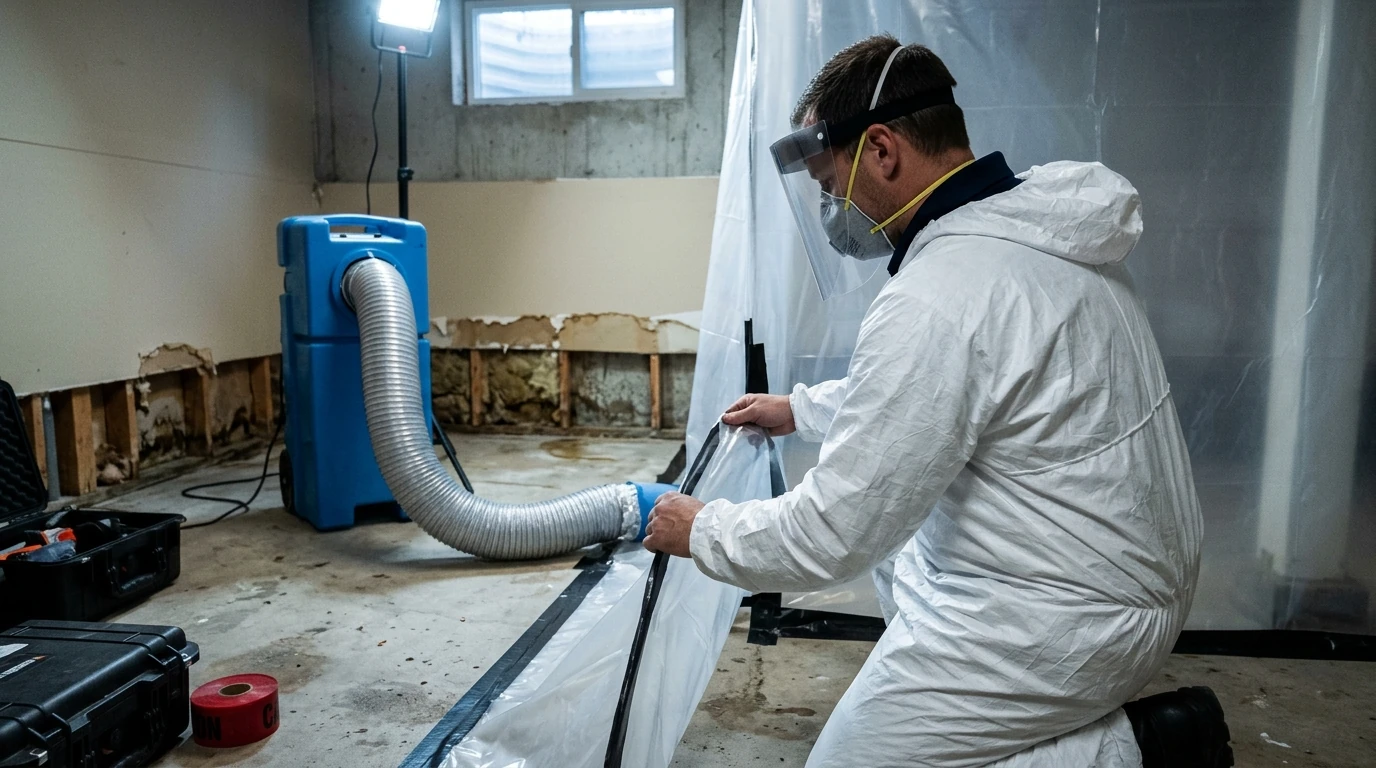
Square footage is the obvious one, but containment matters more than most homeowners expect. The ANSI/IICRC S520 standard defines containment levels based on the size and condition of the affected area. A small Level 1 job might just need poly sheeting over a doorway. A Level 3 job, common after a basement flood, requires negative-air containment with HEPA filtration to keep spores from migrating to the rest of the house, which adds labor and equipment cost.
Materials removed matter just as much. Drywall, carpet, and insulation are porous and usually can’t be cleaned, only removed and replaced. Studs, concrete, and other hard surfaces can often be HEPA-vacuumed and treated with an antimicrobial instead of torn out, which keeps the bill lower. A job behind the walls of an older Old North End home with plaster and lath can also run higher than a newer Briargate build, simply because the materials behave differently once wet.
Finally, if the moisture source that caused the mold, like a slow roof leak or a burst pipe, hasn’t been fixed yet, remediation alone won’t hold. Our water damage restoration team often works the same job to dry the structure and stop the source before mold work even starts, since drying and remediation are frequently billed as connected phases rather than separate projects.
Does homeowners insurance cover mold remediation?
Most homeowners policies cover mold remediation only when the mold is a direct result of a sudden, accidental covered loss, like a burst pipe, not from a gradual leak or deferred maintenance. Even then, many policies cap mold coverage at a specific dollar amount regardless of what the full job costs.
That distinction trips up a lot of homeowners. If a supply line behind your dishwasher suddenly fails and mold develops within the next few days, that’s typically treated differently than mold from a slow leak under a sink that went unnoticed for months. The Insurance Information Institute explains the general pattern: sudden and accidental water damage is usually covered, gradual seepage and wear and tear usually aren’t, and mold coverage riders or sublimits vary significantly by carrier. Check your specific policy language, since this is one of the most inconsistent areas across insurers.
If your mold followed water damage, our post on how quickly mold grows after water damage walks through the timeline insurers and adjusters tend to scrutinize. Documenting the source and the date you discovered it, with photos, strengthens any claim regardless of which way it goes.
What does the mold remediation process actually involve?
Mold remediation follows a sequence: inspect and test, contain the area, control the moisture source, remove contaminated porous materials, HEPA-clean remaining surfaces, treat with antimicrobial, then verify with post-remediation testing. Skipping steps, especially containment or the final verification, is how mold comes back.
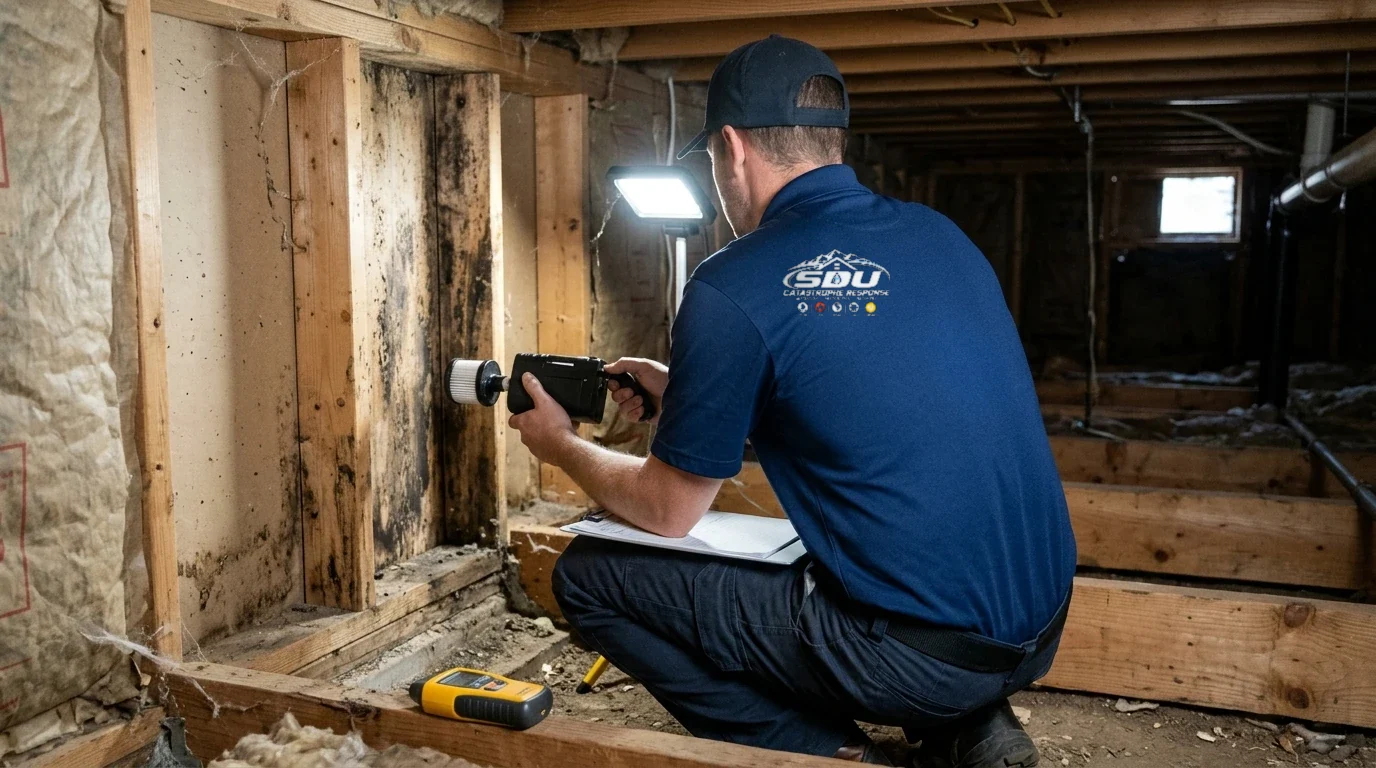
- Inspection and testing. Air and surface samples identify what’s growing and how far it’s spread. Our mold inspection and testing service covers this independently if you just want answers before committing to a remediation scope.
- Containment setup. Poly sheeting and, for larger jobs, negative-air machines isolate the work area so spores don’t travel through the HVAC system or into adjacent rooms.
- Moisture source control. Any active leak gets fixed or the area gets dried to dormant moisture levels before removal starts.
- Material removal. Drywall, insulation, and carpet that can’t be salvaged are bagged and removed under containment.
- HEPA cleaning and antimicrobial treatment. Remaining surfaces are vacuumed with HEPA filtration and treated.
- Clearance testing. A follow-up air or surface sample confirms spore counts have returned to a normal background level before containment comes down.
According to the EPA, mold can begin growing on wet material within 24 to 48 hours, which is why the timeline between discovering water intrusion and starting remediation matters as much as the remediation method itself.
What should you do next?
If you can see or smell mold, start with an inspection rather than guessing at scope from a photo over the phone. An inspection gives you a real number, documents the extent for insurance purposes, and tells you whether the moisture source is still active.
Every property is different, and the only way to get an accurate number for your specific situation is a written scope after an on-site assessment, not a phone estimate. Call SDU Catastrophe Response at (303) 656-9934 to schedule a mold inspection or request a remediation estimate anywhere from Colorado Springs to Monument, Falcon, or Woodland Park.
Mold jobs rarely look exactly like the scenario next door. A basement in Security-Widefield with a slow sump pump failure behaves differently than a crawl space in Black Forest with ventilation issues. Getting eyes on the specific job before committing to a number protects you from surprises halfway through.
About SDU Catastrophe Response
SDU Catastrophe Response is an IICRC Certified Firm serving Colorado Springs and the surrounding Front Range, with technicians holding IICRC AMRT (Applied Microbial Remediation Technician) certification for mold work, alongside WRT and ASD credentials for the water damage calls that often precede it. The company is licensed and insured and operates 24/7 across El Paso and Teller County communities including Monument, Fountain, Falcon, Black Forest, Manitou Springs, and Woodland Park. This guide was prepared with input from Spencer Udell and the SDU Catastrophe Response team.
Video Transcript
Noticed a musty smell in your basement, or dark spots on drywall after a leak? You’re probably wondering what this will cost. In Colorado Springs, mold remediation usually runs six hundred to four thousand dollars for one room, and up to ten thousand for a flooded basement. A small isolated spot costs far less than tearing out wet drywall and insulation across an entire flooded basement. Price depends on square footage, containment level, and how much porous material has to be removed instead of cleaned. Larger jobs often need sealed containment with HEPA filtration to keep spores from spreading through the rest of your home. If the moisture source, like a slow leak or burst pipe, isn’t fixed first, remediation alone won’t hold. Homeowners insurance may help with mold from a sudden event, like a burst pipe, but gradual leaks are often treated differently. Photographing the source and the date you noticed it can help support your claim, whichever way it goes. The process includes inspecting, testing, containing the area, removing damaged material, and verifying the air is clean afterward. Every leak is different, so a written scope after an on-site assessment gives you a real number. Call SDU Catastrophe Response at (303) 656-9934 to schedule an assessment.