TL;DR: Water removal in Colorado Springs typically costs $300 to $4,000 or more for the extraction visit itself, depending on the water category, how many rooms are affected, and whether the call comes in after hours. A single-room clean-water extraction often runs $300 to $800. A flooded basement or multi-room loss commonly lands between $1,500 and $4,000. This figure covers extraction and initial mitigation only, not the structural drying, dehumidification, and rebuild phase that follows a larger loss.
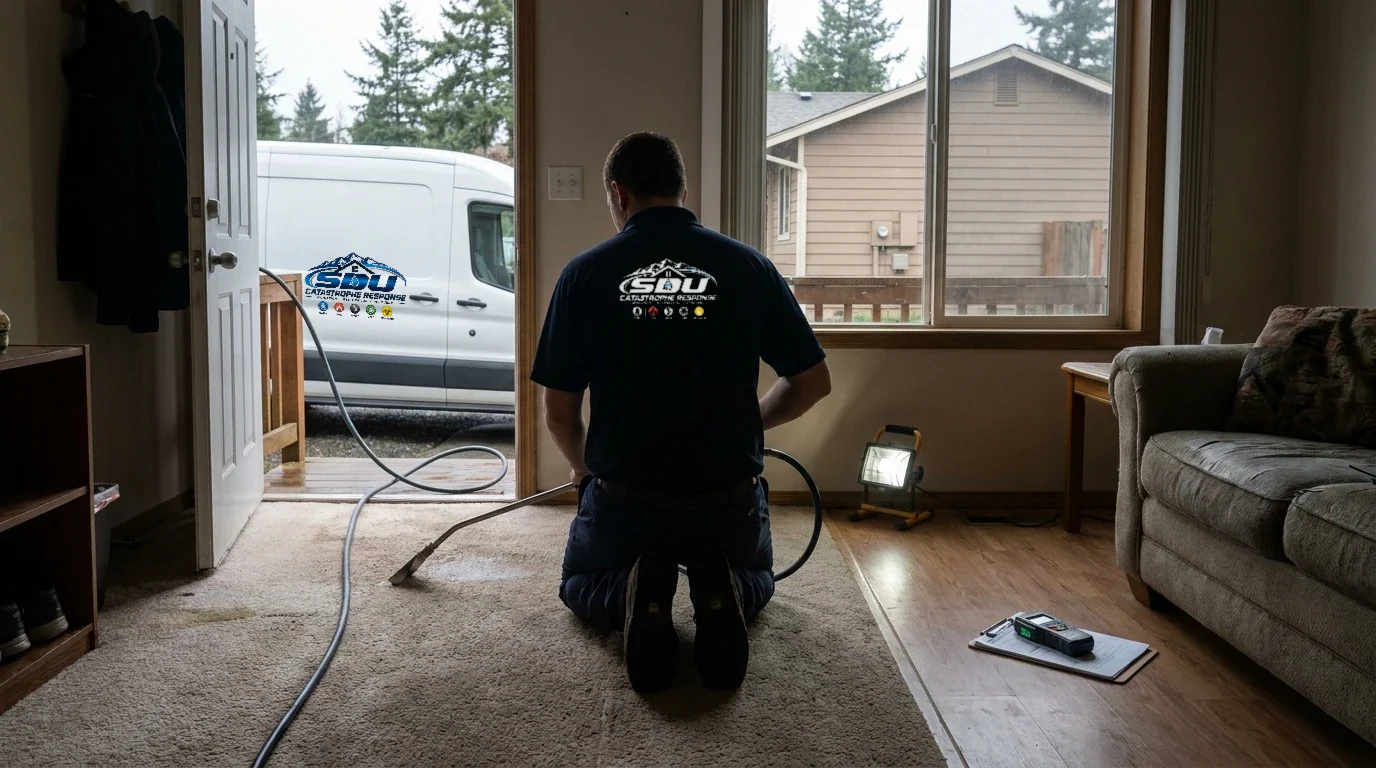
If a dishwasher line let go overnight in a Briargate kitchen, or a sump pump quit during a summer downpour in Security-Widefield, the number you need right now isn’t the full restoration estimate. It’s what the crew pulling up tonight is actually going to charge to get the standing water out, the carpet pad pulled, and the moisture readings documented before mold has a chance to start.
How Much Does Water Removal Cost in Colorado Springs?
Extraction-only water removal in Colorado Springs generally runs $300 to $4,000, with most single-incident residential calls landing between $500 and $1,800. The price scales with square footage, water category, and how saturated the materials are, not with the brand on the truck.
| Scenario | Typical Cost Range |
|---|---|
| Single room, clean water (Cat 1), under 300 sq ft | $300 - $800 |
| Carpet and pad extraction, per room | $150 - $450 |
| Basement extraction, clean to gray water | $800 - $2,500 |
| Multi-room or whole-floor extraction | $1,500 - $4,000 |
| Category 3 water (sewage/black water) extraction | $1,000 - $3,500+ |
| After-hours or weekend emergency call-out | add $150 - $400 |
These ranges reflect typical industry pricing for the Front Range, not a quote. Every loss is different, and SDU Catastrophe Response provides a written scope before any extraction work begins.
What Drives the Price Up or Down?
The category of water matters more than almost anything else. Clean water from a supply line (Category 1) costs the least to extract because it carries the lowest contamination risk. Gray water from an appliance overflow (Category 2) and black water from sewage or flooding (Category 3) require more PPE, antimicrobial treatment, and often full removal of porous materials like carpet pad and baseboard, which raises both labor and disposal cost.
Square footage and depth of water are the next biggest factors. A half-inch of water across a 200 square foot bedroom extracts fast. Six inches across a 1,000 square foot finished basement in Rockrimmon takes a truck-mounted extractor, multiple passes, and significantly more technician time.
Response time also plays in. Water that sat overnight has usually wicked further into drywall and subfloor than water caught within the first hour, which means more material has to come out rather than just dry in place. The ANSI/IICRC S500 standard is the industry benchmark restoration crews follow for classifying water category and determining what has to be removed versus what can be dried.
Water Removal vs. Full Water Damage Restoration: What’s the Difference in Cost?
Water removal is the extraction visit, typically a few hours on-site to pull standing water, pull saturated carpet pad, and set initial containment. Full water damage restoration is the multi-day project that follows: structural drying with air movers and dehumidifiers, antimicrobial treatment, and any drywall or flooring repair.
The extraction visit is usually the smaller line item. Drying equipment rental (often billed per day over 3 to 5 days), monitoring visits, and reconstruction typically make up the bulk of a full claim. Our companion guide on water damage restoration cost in Colorado Springs breaks down that full project cost separately so the two numbers don’t get confused on an estimate.
Will Homeowners Insurance Cover Water Removal Costs?
Most homeowners policies cover water removal when the damage is sudden and accidental, such as a burst pipe or failed appliance hose, but not gradual leaks the homeowner should have caught earlier. The Insurance Information Institute outlines this sudden-versus-gradual distinction as the standard homeowners policy threshold.
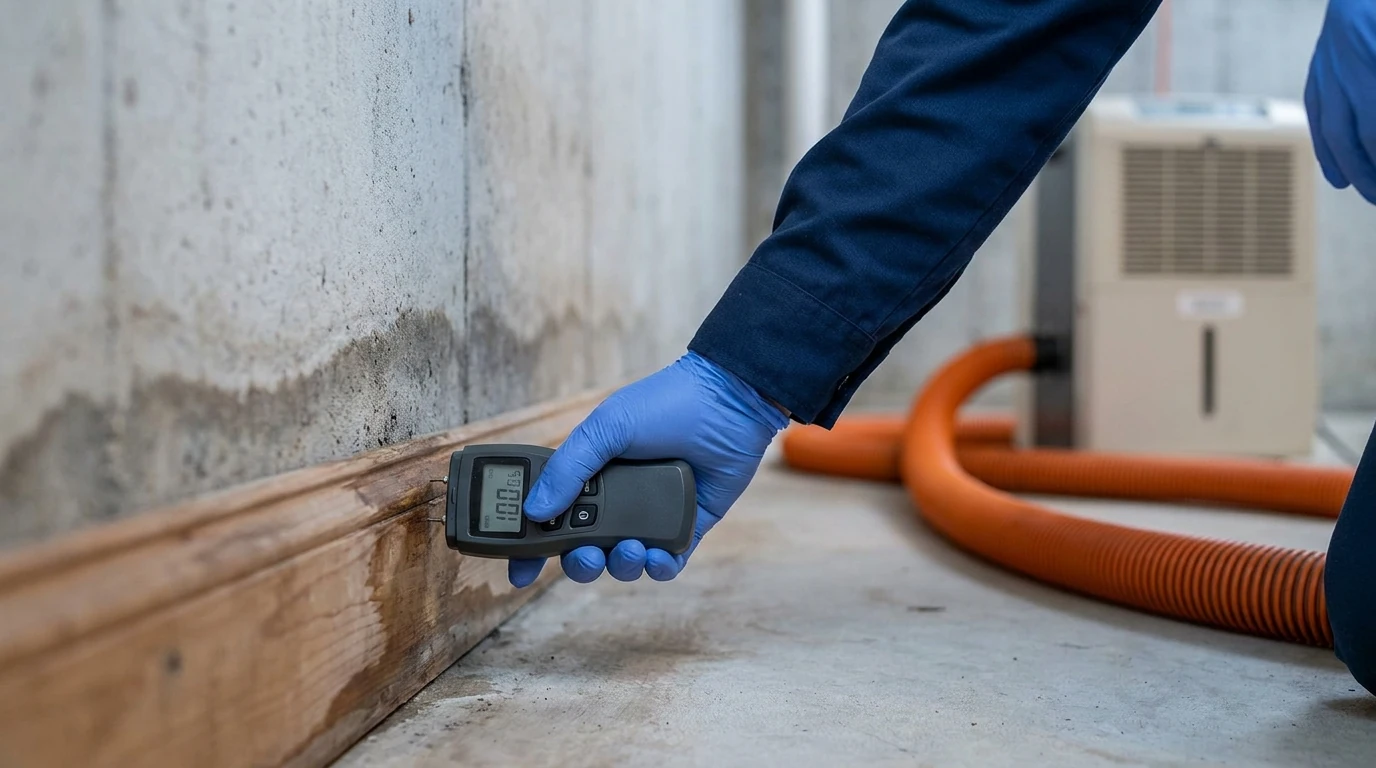
In practice, the extraction invoice is usually the easiest part of a claim to get approved, because it’s clearly mitigation, the work an adjuster expects to see started immediately to limit further loss. Photos of the standing water, moisture meter readings, and a dated invoice before any drying equipment goes in all strengthen that documentation. For a deeper walkthrough of what’s typically covered versus excluded, see our guide on does homeowners insurance cover water damage.
What Happens When You Call for Water Removal?
A water removal visit starts with a quick phone triage: source of the water, how long it’s been standing, and whether it’s safe to enter the space. SDU Catastrophe Response answers 24/7 across Colorado Springs, including Old Colorado City, Briargate, Rockrimmon, and the surrounding Front Range communities.
On arrival, the crew shuts off the water source if it hasn’t been already, then runs truck-mounted or portable extraction equipment across standing water and saturated carpet. They’ll pull carpet pad in most Category 2 and 3 situations, since pad rarely dries clean enough to keep. Moisture readings get logged on affected walls and subfloor before the crew leaves, which becomes the baseline for the drying plan and the insurance documentation if a restoration project follows.
If you’re still in the first few hours of a burst pipe or appliance failure, our burst pipe emergency checklist covers what to do before the crew arrives.
The extraction visit is the fastest, most clearly necessary step in any water loss, which is also why it’s the easiest cost to budget for ahead of a bigger decision about full restoration. Getting that number pinned down early keeps the rest of the claim, and the rest of the project, grounded in reality.
About SDU Catastrophe Response
SDU Catastrophe Response is an IICRC Certified Firm serving Colorado Springs, CO and the surrounding Front Range region 24/7, led by Spencer Udell. The licensed and insured team holds IICRC certifications in water restoration (WRT), structural drying (ASD), mold remediation (AMRT), and fire and smoke restoration (FSRT), and handles water cleanup, storm damage, sewage cleanup, mold remediation, fire and smoke restoration, biohazard and trauma scene cleanup, and post-construction cleaning across the region.
Need help now? Call SDU Catastrophe Response at (303) 656-9934.