If wildfire smoke drifted into your Colorado Springs home, whether from a nearby burn or haze blowing in off a fire miles away, call SDU Catastrophe Response at (303) 656-9934. The company is an IICRC Certified Firm that answers 24/7, and its crews handle smoke damage restoration and odor removal under the ANSI/IICRC S700 standard for fire and smoke restoration. That’s the first call for the soot, the ash, and the smell that won’t leave your walls and fabric. A few related calls, like your insurer or an HVAC tech, come next and in a specific order.
Colorado Springs sits in the wildland-urban interface, where ponderosa pine neighborhoods like Black Forest and foothill communities near Manitou Springs back right up to open land. Locals remember the 2013 Black Forest Fire, the most destructive wildfire in Colorado history at the time, and the 2012 Waldo Canyon Fire that burned into the Mountain Shadows area. Even homes miles from an active fire line can end up with smoke infiltration, ash on the roof, and an odor that settles into carpet, drywall, and HVAC systems for weeks if nobody treats it.
Who Should You Call First for Wildfire Smoke in Your House?
Call a restoration company first if the fire itself is out and you’re dealing with smoke residue, ash, or a lingering odor inside the home. That’s a cleanup and odor-removal job, not an emergency-services job.
Call 911 or your local fire department instead if there’s an active fire threat, visible flame, or you’re under an evacuation order. Restoration starts only after the scene is safe to enter.
Call your insurance company after you’ve documented the damage with photos, not before mitigation starts. Most homeowners policies treat wildfire smoke as a covered peril similar to fire damage, but the adjuster will want to see the condition of the home before cleanup begins, and starting mitigation quickly also supports your duty to prevent further damage under the policy. The Insurance Information Institute has a plain-language breakdown of what standard homeowners policies typically cover for fire and smoke events, though coverage specifics always depend on your actual policy language.
Call an HVAC contractor separately if your air ducts carried smoke through the house. Duct and air-handler decontamination is a distinct trade from structural soot and odor cleanup, so confirm with whoever you hire what their scope actually covers.
What Happens When You Call a Restoration Company for Smoke Damage?
The first call is a short phone assessment: what burned or where the smoke came from, how long the house has smelled this way, and whether anyone in the home has respiratory sensitivities. Have your address, your insurance information if you’ve already filed, and a rough sense of which rooms smell worst ready before you call.
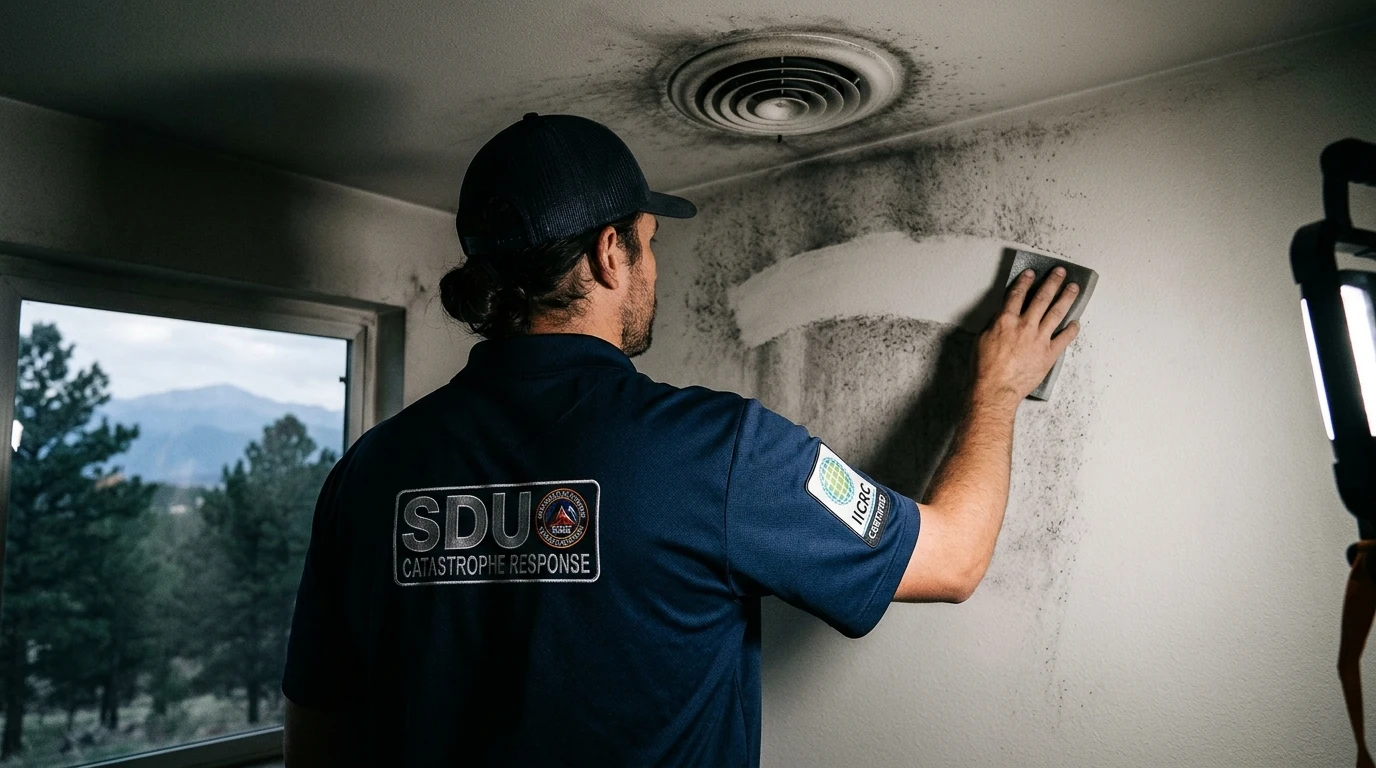
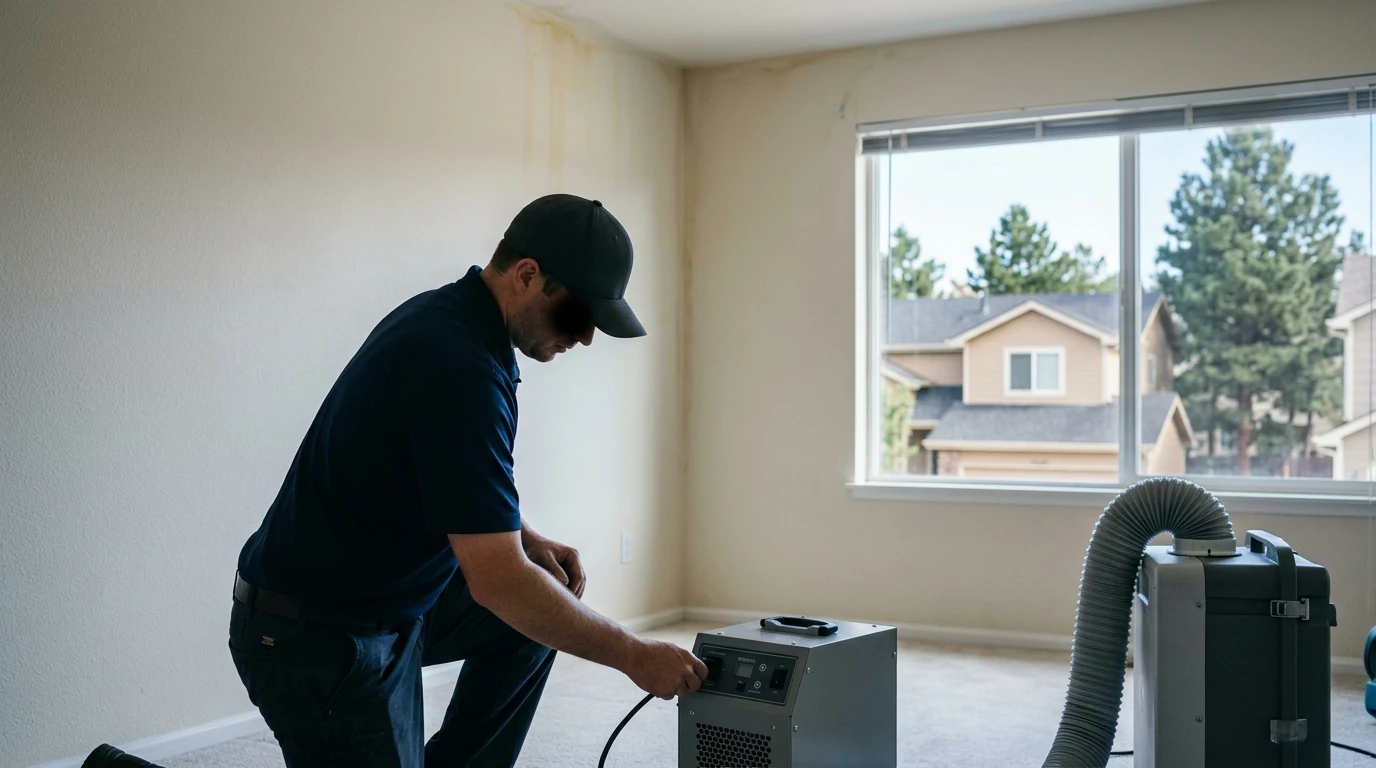
After that, a technician walks the property to identify where soot settled (it collects on cooler surfaces, upper walls, and around supply vents), test which materials absorbed odor versus which just need surface cleaning, and write a scope of work. From there the job typically moves through dry and wet soot removal, sealing or replacing porous materials that absorbed smoke deeply, and active odor treatment with equipment like thermal foggers or hydroxyl generators, which work differently than a store-bought air freshener because they neutralize odor molecules instead of masking them. You can see the fuller sequence in our fire damage restoration process guide, which covers the same steps in more depth.
Does Homeowners Insurance Cover Wildfire Smoke Damage?
Most standard homeowners policies cover wildfire smoke damage because wildfire is a named peril under fire coverage, even when your home wasn’t directly in the burn path. Coverage typically extends to smoke odor remediation, soot cleanup, and damaged contents, subject to your deductible and policy limits.
What gets disputed more often is scope: an adjuster may initially approve surface cleaning while a homeowner’s actual problem is odor trapped in insulation or subflooring. Documentation matters here. Photograph visible soot, keep any receipts for immediate cleanup supplies, and ask the restoration company for a written scope before signing anything, since that scope becomes the basis for the insurance conversation. Every policy is different, so confirm your specific coverage and deductible with your carrier directly.
How Do You Get Wildfire Smoke Smell Out of a House?
Wildfire smoke smell comes out of a house through a combination of source removal and odor-molecule neutralization, not air freshener or opened windows alone. The smell lingers because smoke particles are small enough to work into porous materials like drywall, insulation, upholstery, and wood trim, so masking it rarely holds past a day or two.
An effective process usually includes cleaning or encapsulating affected hard surfaces, HEPA-vacuuming soft surfaces and contents, and running equipment that breaks down odor at the molecular level in enclosed rooms. DIY approaches like scrubbing with household cleaners can actually drive soot deeper into porous materials if done before the right prep steps, which is why persistent smoke odor after a fire event is one of the more common reasons homeowners call in a certified crew instead of continuing to fight it themselves.
What If There’s Visible Ash and Soot Outside the House Too?
Exterior ash and soot on siding, gutters, and roofing should be addressed alongside interior odor work, since ash tracked indoors on shoes or through open windows reintroduces the same problem you just paid to fix. A restoration scope for a wildfire-smoke job typically includes a pass on exterior surfaces that are actively depositing residue back into the home, in addition to the interior work.
If you’re rebuilding or doing exterior work near the Black Forest area specifically, our Black Forest fire damage restoration page covers what that looks like for homes closer to past burn scars.
If smoke has settled into your home and the smell isn’t fading on its own, a written assessment is the fastest way to find out what’s actually affected before you spend money on cleaning supplies that won’t reach it.
About SDU Catastrophe Response
SDU Catastrophe Response is an IICRC Certified Firm serving Colorado Springs, Monument, Black Forest, and the surrounding Front Range since it was founded, with crews holding IICRC credentials in water, structural drying, mold, and fire and smoke restoration. The company answers calls 24/7 and handles fire damage restoration, smoke damage restoration, and odor removal, along with water, storm, mold, sewage, and biohazard response across the region. This post was prepared with input from Spencer Udell.
Need help now? Call SDU Catastrophe Response at (303) 656-9934.