TL;DR: The best mold remediation company in Colorado Springs, CO holds IICRC AMRT training on staff, follows the ANSI/IICRC S520 standard for containment and material removal, hands off post-remediation air or surface testing to an independent third party, and gives you a written scope of work before any demolition starts. SDU Catastrophe Response is an IICRC Certified Firm with AMRT-trained technicians serving Colorado Springs 24/7, licensed and insured.
If you just pulled up carpet after a slow leak in a basement off Old North End or found a musty smell behind the baseboards of a Broadmoor rental, you’re probably staring at a dozen search results and ads that all claim to be “the best.” Here’s how to actually tell the difference between a company that fixes the problem and one that just makes it disappear from view.
What certifications should a mold remediation company in Colorado Springs have?
At minimum, the technicians on site should be AMRT-trained through the Institute of Inspection, Cleaning and Restoration Certification, and the company should follow the ANSI/IICRC S520 Standard for Professional Mold Remediation for every job, not just the ones where a customer asks about it.
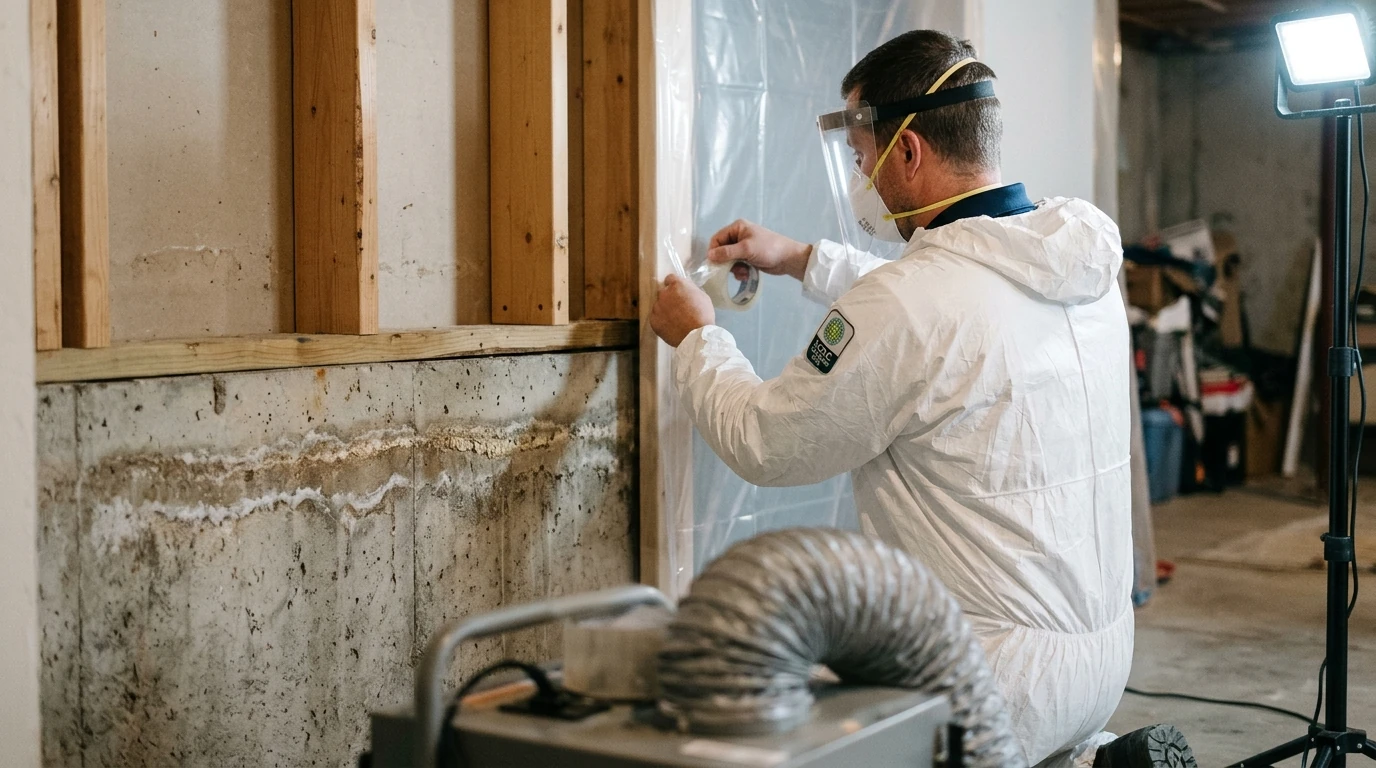
AMRT stands for Applied Microbial Remediation Technician. It covers containment design, negative air pressure, HEPA filtration, and the sequence for safely removing mold-affected materials without spreading spores through the HVAC system. A company that skips containment on a “small” job is cutting a corner that matters: cross-contamination is the single most common reason a remediation fails clearance testing and has to be redone.
SDU Catastrophe Response is an IICRC Certified Firm with AMRT (Mold), WRT (Water), and ASD (Structural Drying) training on staff, and operates 24/7 across Colorado Springs. Ask any company you’re considering for their IICRC certificate number before they walk in the door, not after.
How should containment and clearance testing actually work?
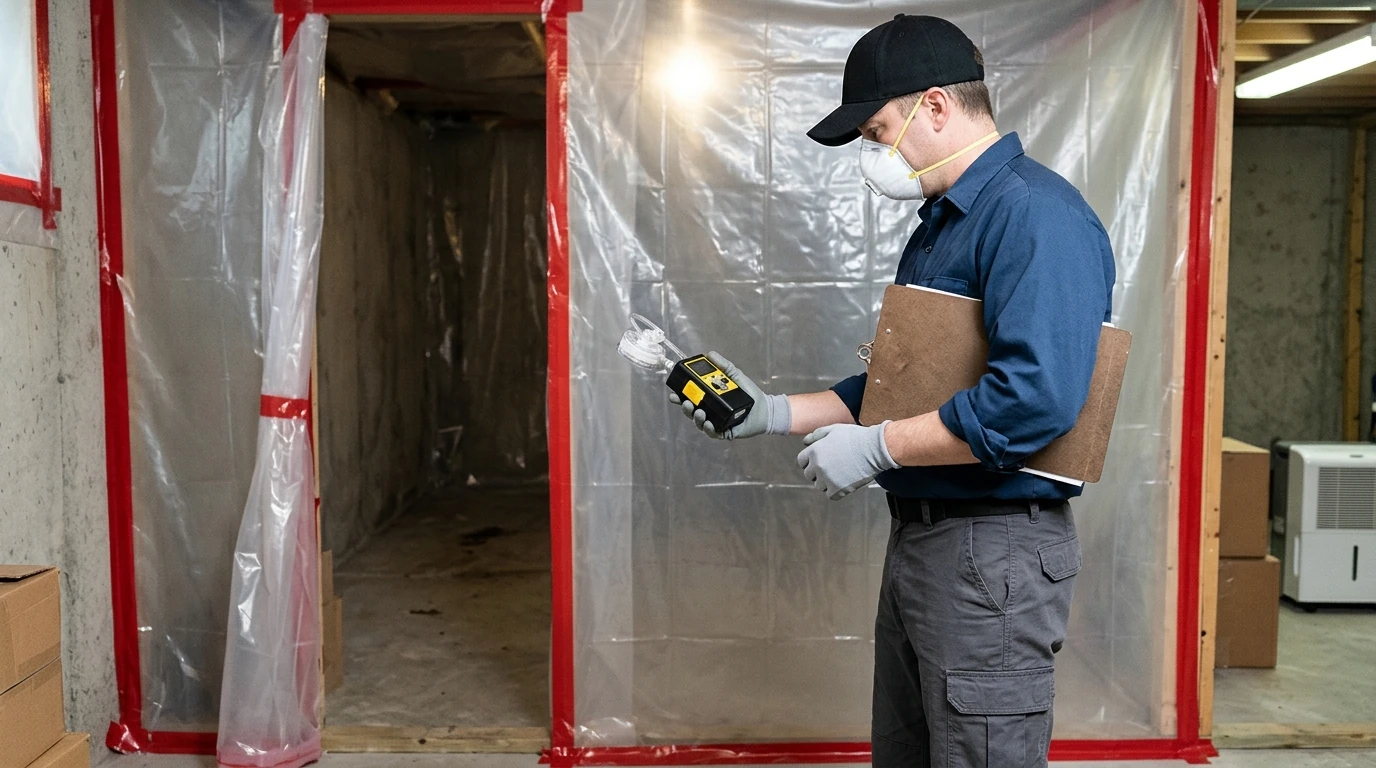
Containment means sealing off the affected area with poly sheeting and running the space under negative air pressure so spores can’t travel to the rest of the house while work is happening. Clearance testing, done after the work, should be performed by an independent inspector, not the same company that did the remediation.
That separation matters more than almost anything else on this list. A company grading its own homework has every incentive to call the job done. A third-party industrial hygienist or inspector takes air samples or surface swabs and sends them to a lab, and you get an objective pass or fail. The EPA’s guidance on mold testing notes there’s no federal standard for “acceptable” mold levels in a home, which is exactly why an independent comparison between outdoor air and indoor air, read by a lab that has no stake in the outcome, is the only test result worth trusting.
If a company tells you they’ll “test it themselves to save you money,” that’s a red flag, not a deal. Our mold inspection and testing service is built around that same independence: testing exists to verify the work, not to rubber-stamp it.
What’s the difference between mold remediation and mold removal?
“Mold removal” implies you can scrub mold away and it’s gone for good; “mold remediation” means identifying and fixing the moisture source, removing affected materials, and verifying the space is safe, because mold always comes back if the water problem that fed it isn’t solved.
Colorado’s Front Range isn’t a humid climate, but Colorado Springs still sees enough slow leaks, failed sump pumps, and snowmelt seeping into basements around Rockrimmon and Monument to keep this a year-round issue. A contractor who sprays bleach on drywall and calls it done hasn’t touched the moisture source. Porous materials like drywall, carpet pad, and insulation that have been colonized usually need to be cut out and replaced, not cleaned, per the EPA’s mold cleanup guidance. If you’re still trying to figure out whether what you’re looking at is actually mold, our post on signs of hidden mold walks through what to check before you call anyone.
At SDU Catastrophe Response, our mold remediation service always starts with locating the moisture source, because remediation that skips that step is just a temporary fix with a bigger bill waiting behind it.
What should be in a written mold remediation scope of work?
A legitimate scope of work names the affected square footage, lists which materials will be removed versus cleaned in place, specifies the containment and air filtration plan, and states who performs the post-remediation clearance test and what “pass” means.
Get this in writing before any demolition starts, not verbally over the phone. If a company wants a signed authorization before they’ve told you what they’re actually going to do and why, that’s a company you keep looking past. Our broader guide on choosing a restoration company in Colorado Springs covers the same vetting questions for water and fire jobs, and most of them apply here too: licensing, insurance, and a scope you can read before you sign it.
Cost is part of that scope conversation. Ranges vary with square footage and how much material has to come out; our mold remediation cost guide for Colorado Springs breaks down what drives the number so you can sanity-check a quote against typical local pricing.
What should you do next?
Start with the paperwork, not the pitch: ask for IICRC certification, confirm who handles clearance testing, and get a written scope before anything gets cut out of a wall.
SDU Catastrophe Response is an IICRC Certified Firm available 24/7 across Colorado Springs, Monument, Fountain, and the surrounding Front Range, licensed and insured for mold remediation work. Call SDU Catastrophe Response at (303) 656-9934 to schedule a moisture assessment, or request a written scope before you commit to anyone.
A mold problem rarely gets smaller while you wait on quotes. The company that answers your certification questions directly, in writing, is usually the one that handles the rest of the job the same way.
About SDU Catastrophe Response
SDU Catastrophe Response is an IICRC Certified Firm serving Colorado Springs, CO and the surrounding Front Range 24/7. Its technicians hold IICRC training in AMRT (mold), WRT (water), ASD (structural drying), and FSRT (fire and smoke), and the company is licensed and insured. SDU handles mold remediation, water damage, fire and smoke restoration, sewage cleanup, storm damage, and related specialty cleaning across the Colorado Springs area.