TL;DR: Flood damage cleanup in Colorado Springs typically costs $1,500 to $4,000 for minor surface flooding in one room, $4,500 to $12,000 for a multi-room storm flood with contaminated water, and $10,000 to $25,000 or more for a fully flooded basement needing drywall, flooring, and antimicrobial treatment. Water category, square footage, and how fast extraction starts all move the number. Floodwater that enters from outside, such as storm runoff or an overflowing creek, is Category 3 water under industry standards and is typically excluded from a standard homeowners policy; that loss usually needs a separate flood policy through the NFIP or a private flood insurer.
If Monument Creek backed up near downtown, or storm runoff poured through a window well during a Front Range downpour and your basement or first floor is sitting in standing water, the number you want first is a cost range, not a pitch. Flood cleanup almost always costs more than a routine pipe-burst job because the water usually carries silt, lawn chemicals, or storm-drain runoff. That means more material comes out of the structure and more disinfection has to happen before drying can even start.
How much does flood damage cleanup cost in Colorado Springs?
Most flood cleanup jobs in the Colorado Springs area fall between $1,500 and $25,000, with the final number set mainly by water category and how much of the structure got wet. These are typical industry ranges, not a quote.
| Scenario | Typical Cost Range |
|---|---|
| Minor surface flooding, single room, under 500 sq ft | $1,500 - $4,000 |
| Storm flooding, multiple rooms, Category 3 water, 500-1,500 sq ft | $4,500 - $12,000 |
| Full basement flood with drywall and flooring removal | $10,000 - $25,000 |
| Whole first-floor or large-loss flooding | $25,000 - $60,000+ |
| Antimicrobial treatment, per affected square foot | $0.50 - $1.50 |
| Contents pack-out and climate-controlled storage | $500 - $3,000 |
Note this is a different scenario than a water heater failure or a supply-line break, which our water removal cost guide covers separately. This guide is specifically about water that enters from outside the home.
What drives the price of flood cleanup up or down?
The biggest cost driver is water category, because Category 3 water forces more demolition than clean water ever would. Under the ANSI/IICRC S500 standard, storm runoff, rising creek water, and any surface water flowing in from outside is classified as Category 3, also called black water: grossly contaminated and unsafe to dry in place against porous materials.
A few things that move the price:
- Square footage and depth. More flooded area and deeper standing water mean more extraction time and more air movers and dehumidifiers to run.
- Material removal. Category 3 water usually means wet drywall, baseboards, insulation, and carpet padding get cut out and discarded rather than dried, since they can’t be safely sanitized.
- Response time. Water sitting more than 24 to 48 hours lets mold begin to grow on wet materials, which adds remediation scope on top of the water cleanup.
- Contents. Furniture, flooring, and personal items that soaked in contaminated water may need professional cleaning, disposal, or pack-out and storage during drying.
- Access and containment. A finished basement with a sump pit or a home near a drainage corridor, like properties close to Fountain Creek or lower Old Colorado City, sometimes needs containment barriers to keep contaminated water from spreading to dry areas during extraction.
Does homeowners insurance pay for flood damage in Colorado Springs?
Usually not, and this is the single most important thing to know before you call anyone. A standard homeowners policy generally excludes flood: water that rises from outside the home, overflowing creeks, storm surface water, and similar events.
According to FEMA’s flood insurance program, flood coverage has to be purchased separately through the National Flood Insurance Program or a private flood carrier; it is not bundled into a typical homeowners policy. If the water came from a sudden, accidental source inside the home instead, like a burst pipe, that is a different claim entirely and is usually handled under the homeowners policy’s water damage section. Our guide to what homeowners insurance covers for water damage breaks down that distinction in more detail.
If you do carry a flood policy, document everything before cleanup starts: photos and video of water lines, standing water depth, and any damaged contents. The storm damage insurance claim checklist walks through what adjusters typically ask for.
What does the flood cleanup process actually involve?
Flood cleanup moves through extraction, demolition of unsalvageable material, disinfection, and structural drying, roughly in that order. Skipping steps to save money usually costs more later in mold remediation.
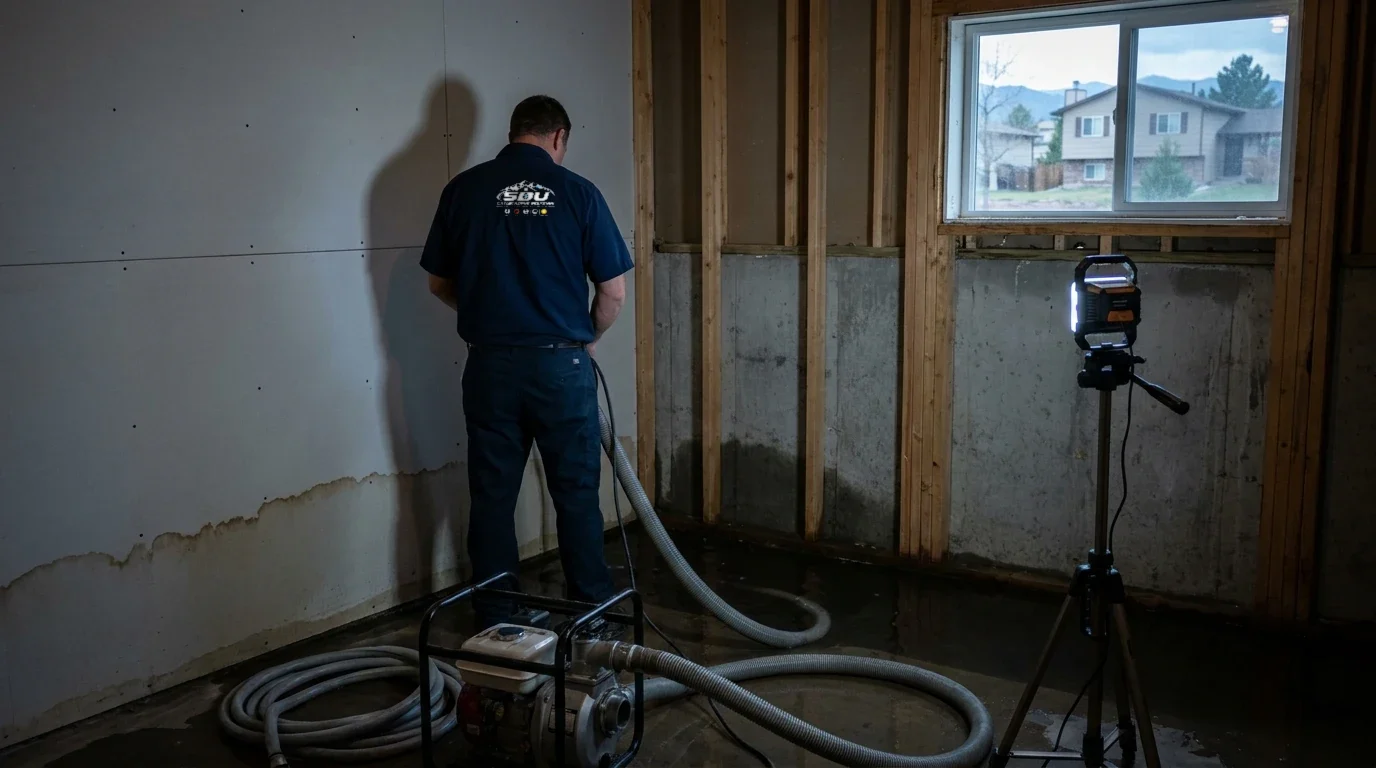
- Water extraction. Truck-mounted or portable extractors remove standing water as fast as possible, since every additional hour increases how far contamination spreads into flooring and subfloor.
- Removal of contaminated materials. Wet drywall (usually cut 12 to 24 inches above the water line), soaked insulation, carpet, and pad typically come out when the water is Category 3.
- Cleaning and antimicrobial application. Remaining structural surfaces get cleaned and treated with an EPA-registered antimicrobial to address contamination the floodwater left behind.
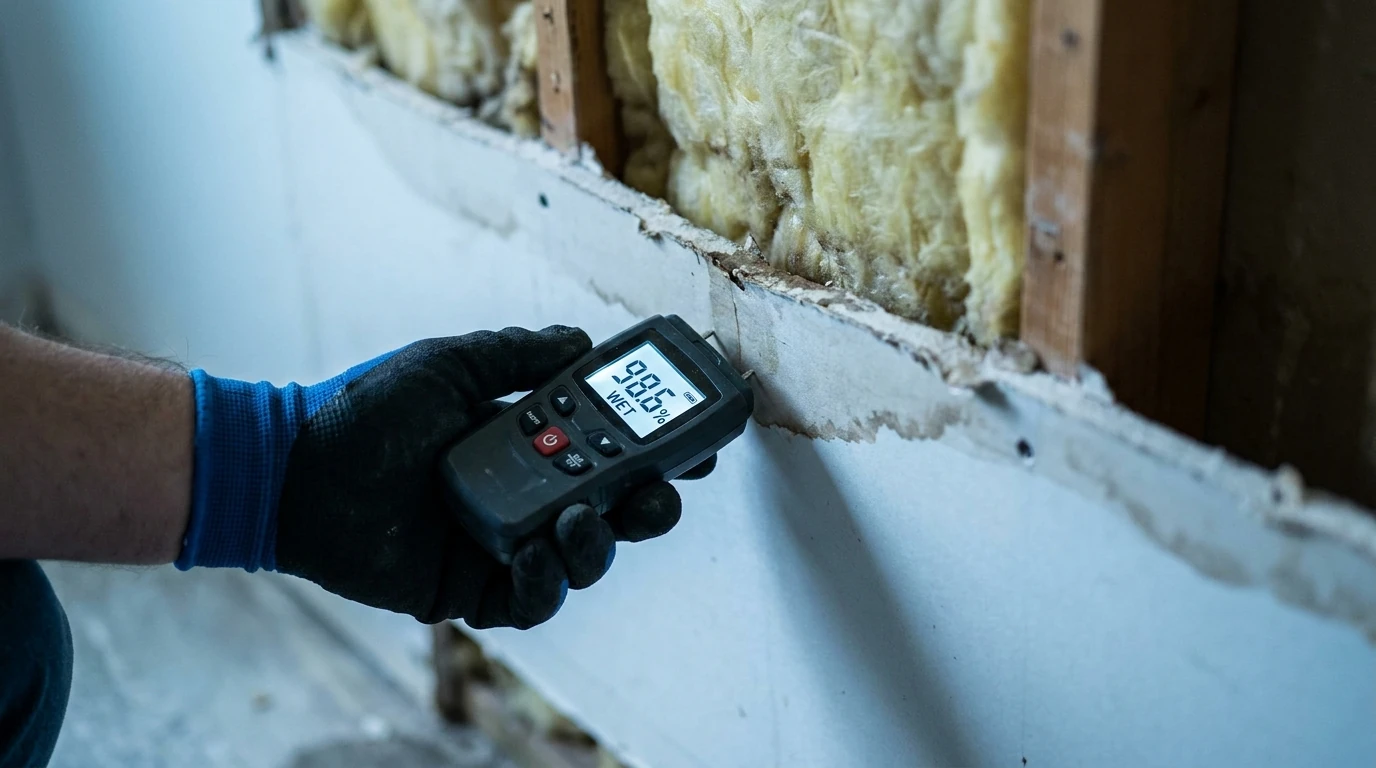
- Structural drying. Air movers and low-grain-refrigerant dehumidifiers run until moisture meter readings confirm the studs, subfloor, and remaining materials are back to a dry standard, which is typically several days depending on how much the structure absorbed.
- Monitoring and documentation. Daily moisture readings get logged, both to confirm the structure dried correctly and to support an insurance claim if coverage applies.
When does storm flooding need a restoration crew instead of a shop vac?
Once water has been standing more than a few hours, covers more than a small area, or came from outside the home, it is past the point where a wet/dry vac and box fans will dry it correctly. At that point the water is almost always Category 3, and drying it without removing the right materials and applying antimicrobial treatment risks mold growth inside wall cavities you can’t see.
SDU Catastrophe Response handles storm and surface floodwater extraction, contaminated material removal, and structural drying for homes across the Colorado Springs area, and documents moisture readings throughout the job for insurance purposes. Call SDU Catastrophe Response at (303) 656-9934 to get a written scope before cleanup starts.
Every flooded property dries differently depending on what the water touched and how long it sat. A written scope, not a phone estimate, is the only way to know the real number for your home.
About SDU Catastrophe Response
This IICRC Certified Firm serves Colorado Springs, CO and the surrounding Front Range, with technicians holding IICRC Water Damage Restoration (WRT) and Applied Structural Drying (ASD) credentials. The crew handles water cleanup, flood damage restoration, emergency water removal, and related storm and sewage cleanup work across the region, operating on a 24/7 basis.