TL;DR: Smoke damage cleanup in Colorado Springs typically costs $400 to $1,200 for a single contained room and $2,500 to $6,500 for whole-house smoke and odor remediation after a larger fire. The biggest cost driver is how far the soot traveled and whether odor has absorbed into porous materials like drywall, insulation, and HVAC ductwork. Most homeowners policies cover smoke damage cleanup when it follows a covered fire, but a written scope of work protects the claim.
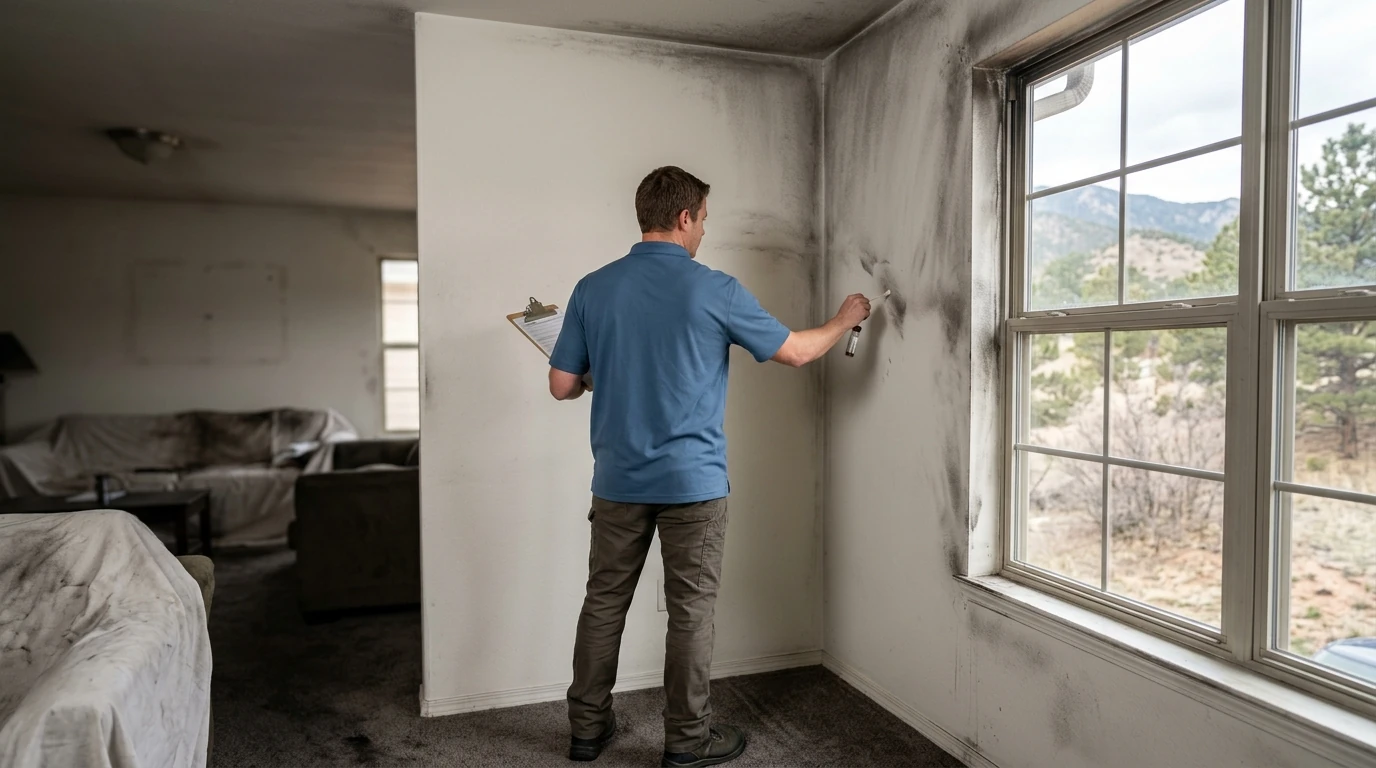
If a grease fire on the stove got out of hand for thirty seconds, or a neighbor’s house fire sent smoke drifting through your vents in Old Colorado City or Briargate, you’re probably staring at a gray film on every surface right now and wondering two things: what this is going to cost, and whether your insurer is going to pay for it. Smoke-only losses, meaning the structure itself wasn’t burned but soot and odor spread through the home, are more common than full fire losses and usually cheaper to resolve, but the price still varies a lot based on how far and how deep the smoke got.
How much does smoke damage cleanup cost in Colorado Springs, CO?
Smoke-only cleanup typically costs $400 to $1,200 for one contained room and climbs to $2,500 to $6,500 for whole-house remediation, depending on how far the soot traveled and whether it reached your HVAC system. A kitchen fire that stayed contained to the stove area costs far less to resolve than smoke that circulated through ductwork and settled into carpets, drapes, and upholstery in every room.
| Scenario | Typical Cost Range |
|---|---|
| Single room, light soot (contained kitchen fire) | $400 - $1,200 |
| Whole room, moderate smoke staining on walls and ceiling | $1,200 - $3,000 |
| Smoke odor treatment, per room (thermal fogging or ozone) | $300 - $800 |
| Whole-house smoke odor remediation | $2,500 - $6,500 |
| HVAC and duct cleaning after smoke infiltration | $450 - $1,200 |
| Contents cleaning and deodorization, per load | $200 - $600 |
These are typical industry ranges, not a quote. Every loss is different, and SDU Catastrophe Response provides a written scope before any work begins so you know exactly what you’re paying for and why.
What drives the cost of smoke damage cleanup?
The main cost factors are how far the smoke traveled, what it touched, and how long it sat before cleanup started. A fire that burns hot and fast (like a grease flare-up) produces different soot than a smoldering fire, and the two clean up very differently.
Soot type matters. Dry soot from a fast, hot fire wipes off most hard surfaces with the right technique. Wet, smoldering soot (common after upholstery or mattress fires) smears and bonds to surfaces, which means more aggressive cleaning or, in some cases, replacing the material instead of cleaning it.
Porous materials cost more. Drywall, insulation, carpet padding, and unsealed wood absorb smoke odor at a molecular level. Those materials often get removed rather than treated once the odor has set in, which adds demolition and rebuild cost on top of cleaning.
HVAC involvement changes the math. If the furnace was running when the fire started, smoke particles get pulled through the ductwork and redistributed to every room on that circuit. That turns a one-room job into a whole-house job and adds duct cleaning to the scope.
Response time matters too. Soot is acidic and corrodes metal, yellows plastics, and etches glass the longer it sits. A cleanup started within 48 hours generally costs less than one started a week later, because fewer materials have reached the point of no return.
How much does smoke odor removal cost separately?
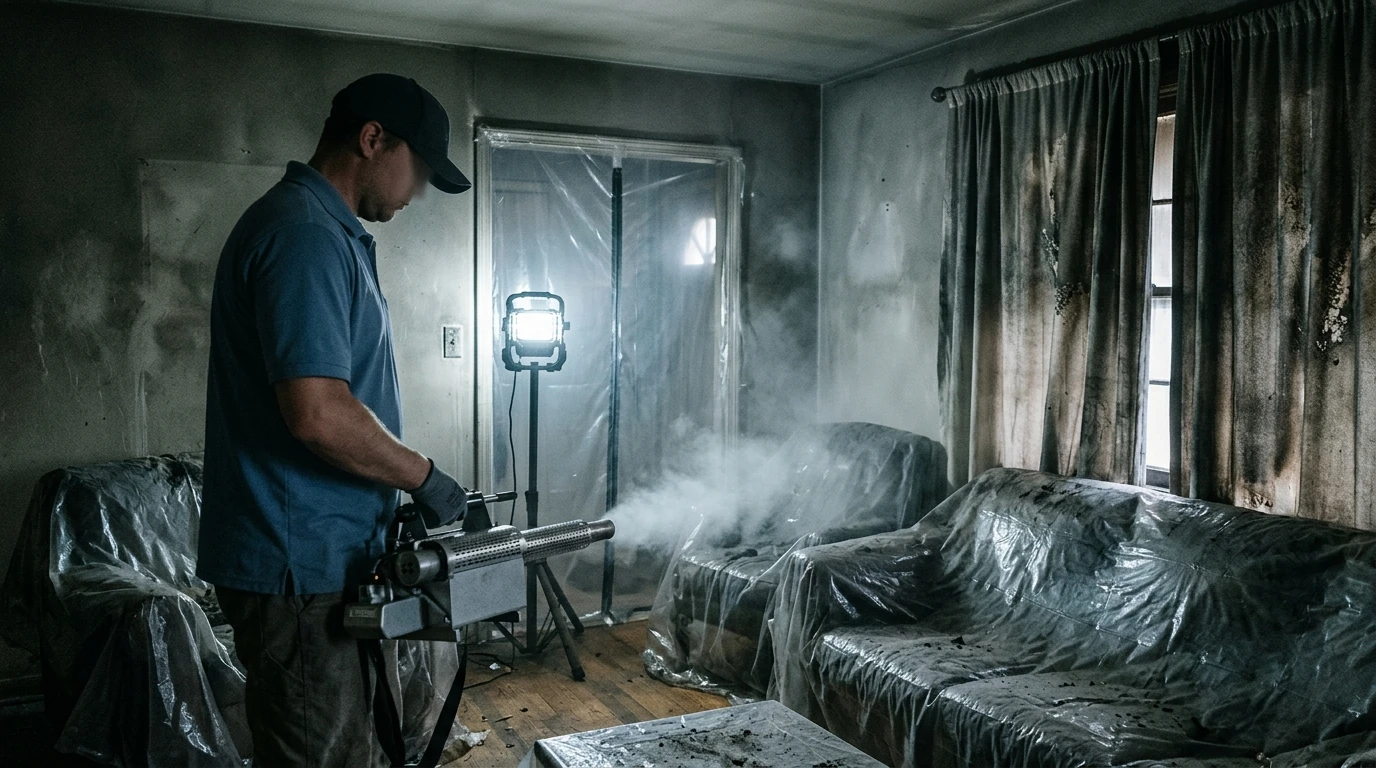
Smoke odor treatment alone typically runs $300 to $800 per room, or $2,500 to $6,500 for a whole house, and the method used affects both the price and the result. The two most common professional methods are thermal fogging and ozone treatment, and they aren’t interchangeable.
Thermal fogging vaporizes a deodorizing agent that mimics how smoke itself penetrated cracks, crevices, and porous surfaces, which makes it effective for odor trapped deep in materials. Ozone treatment oxidizes odor molecules in open air and works well for lighter, more surface-level odor but needs the space vacated during treatment and ventilated afterward. Many jobs use a combination of both, plus HEPA air scrubbing, depending on how deep the odor sits.
We’ve written a more technical breakdown of exactly how these methods work and why most DIY odor-removal attempts (candles, air fresheners, baking soda) fail on real smoke odor: see how professionals remove smoke odor. For pricing on more extensive fire losses where structural materials burned, our fire damage restoration cost guide covers that separately.
Is smoke damage covered by homeowners insurance?
Most homeowners insurance policies cover smoke damage cleanup when the smoke resulted from a covered, sudden fire, whether the fire happened in your home or a neighbor’s. This includes the cleanup, odor remediation, and often the contents cleaning that follows.
What gets complicated is scope and documentation. Insurers want an itemized, room-by-room assessment of what’s affected and why it needs cleaning versus replacement, not a vague estimate. Photograph everything before cleanup starts, keep the smoke-damaged items you’re not sure about (don’t throw anything away until it’s documented), and get a written scope from a restoration company before work begins. The Insurance Information Institute notes that fire and smoke are among the perils covered by a standard policy, though coverage details and deductibles vary by insurer and policy, so confirm specifics with your agent before assuming a given item or service is included.
If the fire happened in someone else’s unit or a neighboring property, your claim may route through their liability coverage instead of your own policy. Either way, our storm damage insurance claim checklist has a documentation framework that applies to fire and smoke claims too.
What does the smoke damage cleanup process look like?
A smoke-only cleanup follows a defined sequence: assessment, containment, cleaning, and odor treatment, generally completed in that order so later steps don’t undo earlier ones. Professional crews follow the ANSI/IICRC S700 standard for fire and smoke restoration, which sets the technical benchmarks for this work.
- Assessment. A technician identifies soot type, tests surfaces, and maps how far smoke traveled, including checking the HVAC system.
- Containment. Plastic sheeting and negative air pressure keep soot from spreading to unaffected rooms during cleanup.
- Surface cleaning. Walls, ceilings, hard surfaces, and salvageable contents get cleaned with techniques matched to the soot type (dry sponging for light soot, chemical cleaning for bonded residue).
- Odor treatment. Thermal fogging, ozone, or HEPA air scrubbing (often in combination) addresses what cleaning alone can’t remove.
- Final verification. A walkthrough confirms odor and visible residue are gone before the job is closed out.
For a more detailed walk-through of each phase, including how this differs when there’s also structural fire damage, see our fire damage restoration process guide.
If you’re staring at soot right now in a home in Colorado Springs, Monument, or Fountain, the fastest way to get an accurate number is a written scope from someone who’s assessed the space in person. Call SDU Catastrophe Response at (303) 656-9934 to schedule a smoke damage assessment.
About SDU Catastrophe Response
SDU Catastrophe Response is an IICRC Certified Firm serving Colorado Springs, Colorado and the surrounding Front Range, holding IICRC credentials in water restoration (WRT), structural drying (ASD), mold remediation (AMRT), and fire and smoke restoration (FSRT). The company is licensed and insured and operates on a 24/7 basis, handling fire and smoke damage restoration, smoke odor removal, water damage restoration, mold remediation, storm damage restoration, and related specialty cleaning across the region.