If storm runoff just pushed water through a window well, under the garage door, or across the basement slab somewhere between Old Colorado City and Briargate, the fastest call for flash flood water extraction and structural drying is SDU Catastrophe Response at (303) 656-9934. They’re an IICRC Certified Firm that answers 24/7, so a flash flood that rolls off the Front Range during a monsoon cell gets the same response at 2 a.m. as it does at 2 p.m.
Flash flooding in Colorado Springs usually isn’t a slow seep. It’s water moving fast, off Pikes Peak drainages, out of Fountain Creek and Monument Creek, or down streets that funnel runoff toward the lowest point on the block. That speed changes who you call, and in what order.
Do You Need to Call 911 Before Anyone Else?
Call 911 first only if someone is trapped by rising water, a vehicle is stuck in moving water, or a downed power line is touching the water. Everything else can wait for the second call.
Flash flood water in this city tends to show up where it isn’t expected: a street near Monument Creek by the Air Force Academy can rise a foot in minutes during a heavy cell, and underpasses fill faster than drivers expect. Never drive or walk into moving water, even water that looks shallow. The National Weather Service’s flood safety guidance covers this well: turn around, don’t drown.
What’s the Right Order of Calls After the Water’s In?
Once everyone’s safe, the order is utility shutoff if water is near outlets or the furnace, then a restoration company to start extraction before it soaks further into drywall and subfloor, then your insurance company once mitigation is already underway.
Shut off power at the panel for affected circuits only if you can reach it without stepping into water. This is storm water coming in from outside, not a plumbing failure, so there’s no water main to close. Call the restoration company next. The sooner extraction starts, the less drywall, insulation, and flooring you lose, and the lower the mold risk. Document everything with photos and video before anything gets moved or torn out, then call your insurer. Most policies require you to limit further damage once you’re aware of it, and adjusters want to see the damage was already being controlled, not ignored, when they review the claim.
Is Floodwater From a Flash Flood Safe to Touch?
No. Storm floodwater that has crossed streets, yards, or driveways before reaching your home counts as Category 3 water, also called black water, under the IICRC’s water restoration standard. It can carry motor oil, fertilizer, pet waste, and whatever debris it picked up on the way to your foundation.
Keep kids and pets away from it, and don’t let bare skin sit in standing water for long. Wear rubber boots and gloves if you have to wade through it to check on something. Porous materials that sat in Category 3 water, carpet pad, drywall below the waterline, insulation, usually get removed rather than dried in place, which is different from the clean-water pipe breaks most people picture. The EPA’s flooded homes cleanup guidance covers safe handling for exactly this situation.
Will Homeowners Insurance Pay for Flash Flood Damage?
Usually not under a standard homeowners policy. Water that rises from the ground or flows in from outside, like flash flood runoff through a window well or under a door, is flood damage, and flood coverage requires a separate National Flood Insurance Program policy or private flood policy. Standard homeowners insurance typically covers sudden, accidental water damage from inside the home, like a burst pipe, but excludes surface water and flooding.
That distinction surprises a lot of homeowners after the fact, so it’s worth checking your policy before you need it. FloodSmart.gov explains what an NFIP policy actually pays for. If you’re also dealing with a claim question on the storm side, our storm damage insurance claim checklist walks through documentation that applies either way. If your water is coming up through the foundation slowly rather than pouring in through a door or window well during a storm, that’s a different mechanism worth reading about separately in our flooded basement guide.
What Happens When You Call a Restoration Crew for Flash Flood Water?
The first call is mostly questions: where the water came in, which rooms are affected, whether there’s standing water near outlets or the furnace, and how long it’s been sitting. That lets the crew bring the right pumps and extraction equipment instead of guessing.
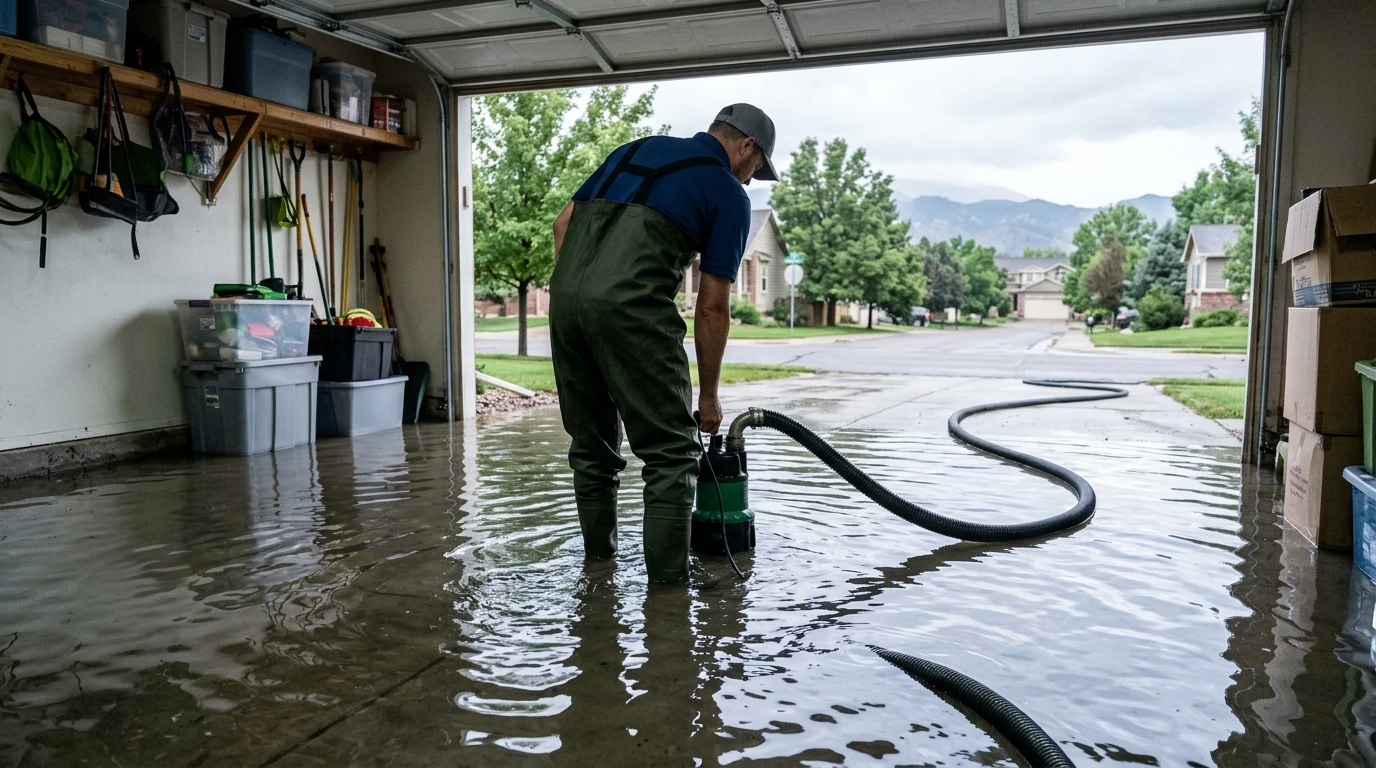
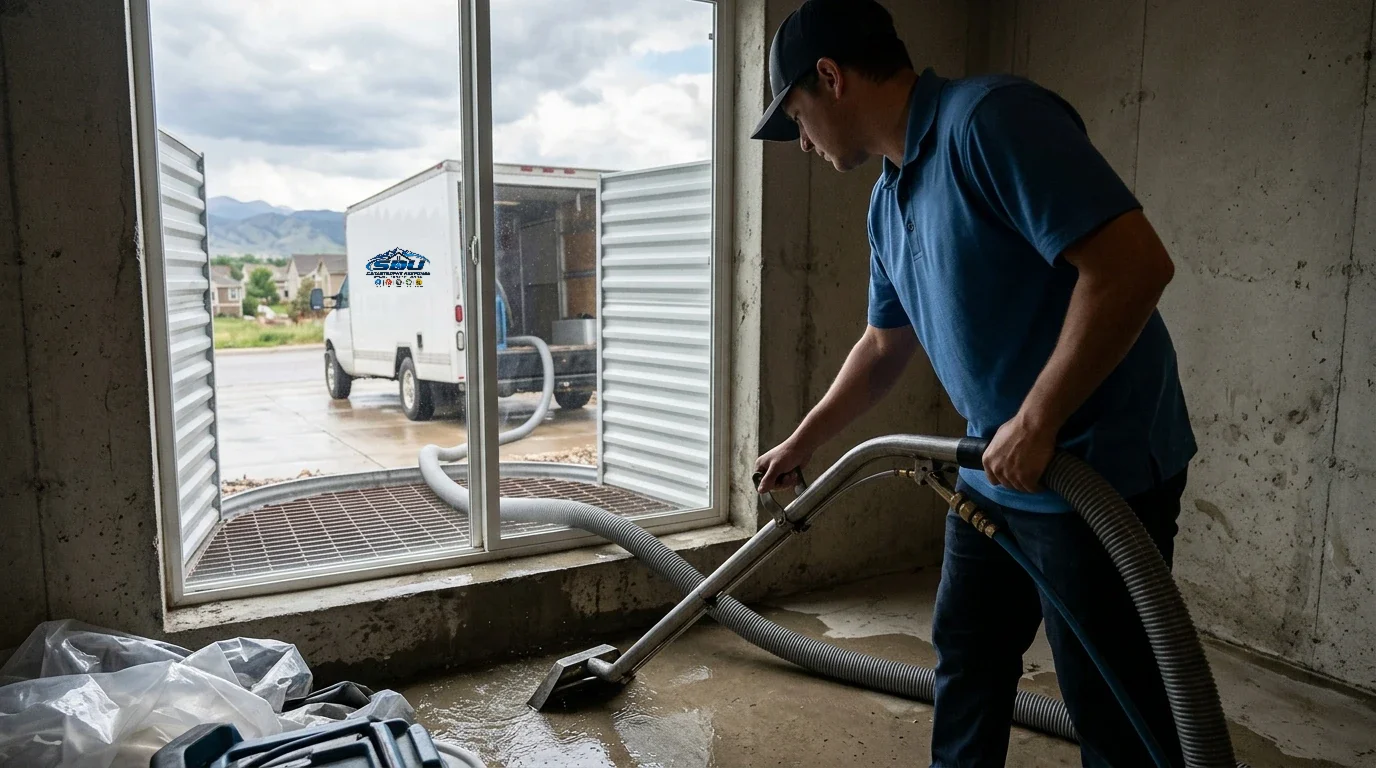
On arrival, the priority is getting standing water out fast with truck-mounted extractors or submersible pumps, then placing air movers and dehumidifiers to start drying what’s salvageable. Anything contaminated gets documented with photos before removal, both for your claim and for the scope of work. Mold risk starts within 24 to 48 hours on wet materials, so the gap between the flood and the first extraction matters more than almost anything else in how much you end up replacing.
If hail or wind damage came with the storm, that’s a separate but related scope, our storm damage restoration team and water cleanup crews often work the same call together. And if drying gets delayed for any reason, it’s worth having a mold remediation assessment on the calendar rather than waiting to see if a smell shows up.
A flash flood through a window well or garage door moves fast and leaves contaminated water behind, which is exactly why the call order matters: safety first, then extraction, then the insurance conversation once the damage is already being controlled. Call (303) 656-9934 to get a flood damage restoration crew started before the water sits any longer.
About SDU Catastrophe Response
An IICRC Certified Firm serving Colorado Springs and the surrounding Front Range communities, including Monument, Fountain, and Manitou Springs, the company holds certifications in water restoration (WRT), structural drying (ASD), mold remediation (AMRT), and fire and smoke restoration (FSRT), and runs a 24/7 emergency line for storm and flood calls. Spencer Udell leads the crews that handle the extraction and drying work flash flooding requires.
Need help now? Call SDU Catastrophe Response at (303) 656-9934.
Video Transcript
A flash flood can push water through your window well or garage door in minutes, turning your basement into a disaster zone. Call 911 first only if someone’s trapped, a car is stuck in moving water, or a power line is down. After everyone is safe, shut off power near water if it’s reachable, then call a restoration crew before calling your insurer. Never step into standing water to reach a breaker. Floodwater from outside can carry oil, debris, and bacteria you can’t see. Mold can start growing within 24 to 48 hours, so getting extraction started fast protects your drywall, flooring, and insulation. Keep kids and pets away from the water, and document everything with photos before anything gets moved or removed. Standard homeowners insurance usually doesn’t cover flash flood water, so check your policy and document damage to support your claim. A professional crew arrives with pumps and extractors to remove standing water fast, then sets up air movers to dry everything out. If hail or wind came with the storm, your contractor can handle water cleanup and storm repairs on the same visit. Don’t wait for mold to show up. Call SDU Catastrophe Response at (303) 656-9934 to schedule an assessment.